








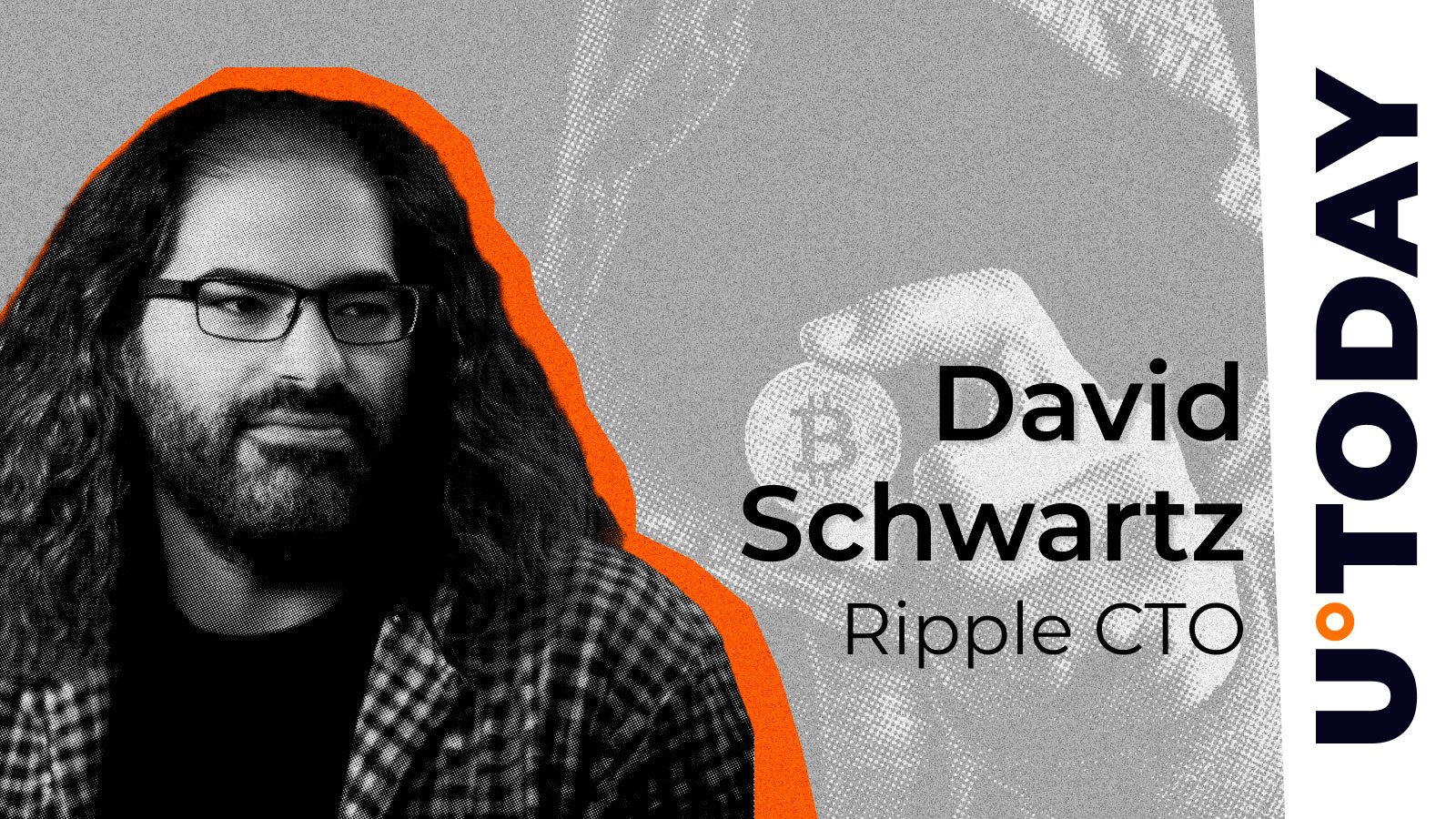
XRP continues to dominate discussions in the crypto space as Ripple CTO David Schwartz shares provocative insights into the early days of Bitcoin and how they relate to Ripple’s own journey.
XRP continues to dominate discussions in the crypto space as Ripple CTO David Schwartz shares provocative insights into the early days of Bitcoin and how they relate to Ripple’s own journey. According to Schwartz, the mysterious creator of Bitcoin, Satoshi Nakamoto, might be viewed as the original issuer of Bitcoin, igniting a broader debate about what defines a cryptocurrency issuer in today’s decentralized economy.
Schwartz’s comments emerged during an online discussion, where he drew comparisons between Bitcoin’s inception and the foundation of other cryptocurrencies like Ethereum and XRP. He asserted that since Satoshi mined the initial blocks and launched Bitcoin’s network, one could reasonably argue that Satoshi acted as the coin’s issuer during its infancy.
He supported this point by referencing how Ethereum had a well-defined issuer during its pre-sale phase, suggesting that involvement in launching a blockchain and facilitating its early use could qualify as a form of issuance. This perspective challenges contemporary understandings within the crypto community, especially regarding regulatory frameworks that scrutinize the origins and creators of digital assets.
The topic surfaced in the midst of a broader debate about whether Ripple can be classified as the issuer of XRP. Schwartz, who was instrumental in the development of the XRP Ledger, pushed back against narrow definitions, arguing that issuance should not solely be determined by the entity that launched the token but also by the infrastructure and ecosystems that support its use today.
In this context, Schwartz proposed a more layered definition of what it means to be an issuer. He explained that major exchanges and platforms that allow trading and facilitate market access might be seen as playing an issuer-like role. This is due to their involvement in setting up the liquidity and usability infrastructure that make a token viable for public use and exchange.
This framing could shift how stakeholders analyze Ripple’s involvement with XRP. If the definition of ‘issuer’ stretches beyond the origination of the token to the broader financial support system it operates within, then Ripple’s position might be less prominent than traditionally assumed. Schwartz’s viewpoint challenges regulators and critics to reconsider the fundamental question: who truly defines a cryptocurrency’s beginning and function?
The Ripple CTO also addressed XRP’s formative years, stating that the token was “literally worthless” at its inception. During those early stages, there was genuine uncertainty over whether the venture would gain traction. There was no established market for XRP, no centralized trading system, and no initial goal of creating a valuable digital asset. This candid recollection underscores the grassroots nature of XRP’s emergence and Ripple’s cautious optimism at the time.
Finally, speculation again surfaced about whether Schwartz himself could be Satoshi Nakamoto. This old theory has lingered in crypto circles owing to Schwartz’s deep cryptographic expertise and early involvement in blockchain technology. However, he has consistently denied such claims, affirming that he didn’t encounter Bitcoin until 2011—well after the digital currency had been deployed and was gaining traction. He maintains that he had no role in Bitcoin’s development and only discovered the project post-launch.
Related: Expert Advice: Sell XRP If You’re Confused
As discussions like these unfold, Ripple continues to be a major player shaping how modern financial infrastructures engage with decentralized assets. XRP’s evolution, coupled with Schwartz’s thought leadership, keeps the spotlight on the intersection between decentralization, issuance, and the future contours of financial ecosystems driven by digital currency.
Quick Summary
XRP continues to dominate discussions in the crypto space as Ripple CTO David Schwartz shares provocative insights into the early days of Bitcoin and how they relate to Ripple’s own journey.
Source
Information sourced from official Ripple publications, institutional research, regulatory documentation and reputable crypto news outlets.
Author
Ripple Van Winkle is a cryptocurrency analyst and founder of XRP Right Now. He has been active in the crypto space for over 8 years and has generated more than 25 million views across YouTube covering XRP daily.
Editorial Note
Opinions are the author's alone and for informational purposes only. This publication does not provide investment advice.

