








XRP is once again in the spotlight as developments surrounding U.S. regulatory frameworks suggest a potential breakthrough in launching a spot XRP ETF. Recent activity across crypto markets indicates how regulatory clarity could significantly influence institutional adoption of XRP, particularly through ETFs.
XRP is once again in the spotlight as developments surrounding U.S. regulatory frameworks suggest a potential breakthrough in launching a spot XRP ETF. Recent activity across crypto markets highlights how regulatory clarity could significantly influence institutional adoption of XRP, particularly through ETFs.
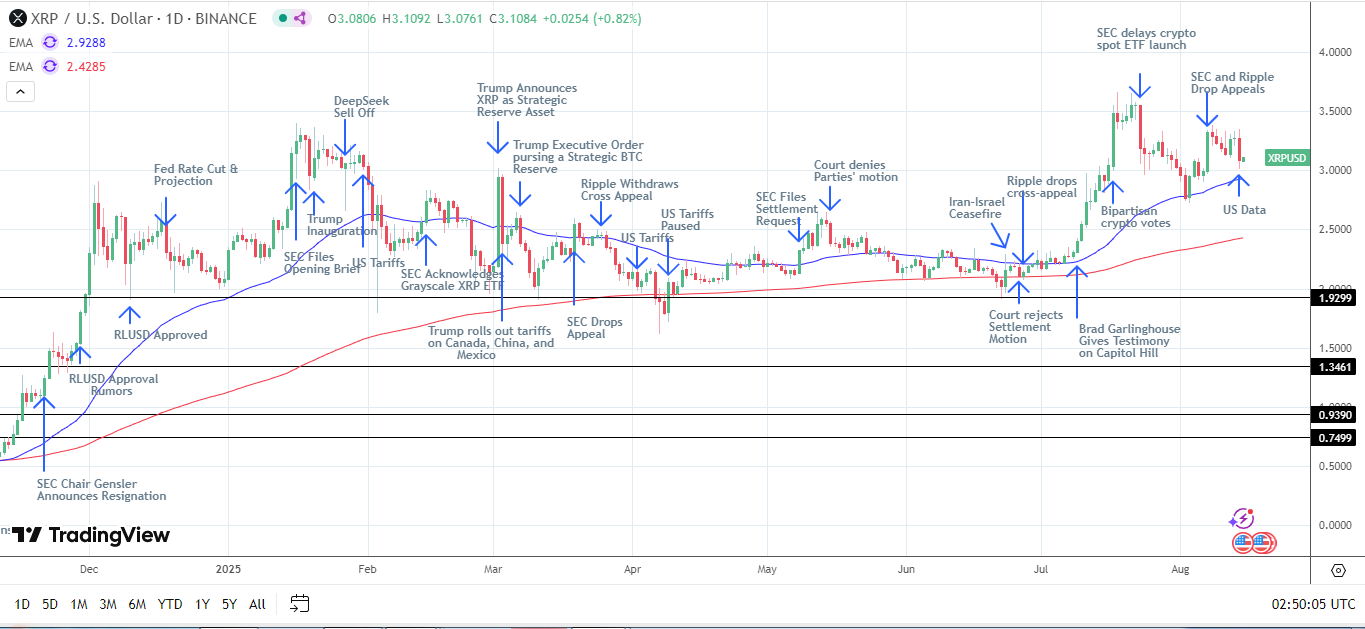
The ongoing anticipation surrounding a spot XRP ETF has triggered a notable market reaction. On August 14, XRP experienced a sharp 5.78% drop, reflecting growing investor uncertainty tied to the timing of an ETF approval by the U.S. Securities and Exchange Commission (SEC). While Bitcoin also responded to macroeconomic signals, XRP’s decline was more severe as ETF-related expectations played a larger role.
Ripple’s CEO previously discussed the broader implications of crypto ETFs. He emphasized that the launch of a Bitcoin ETF was transformative for institutional participation and suggested that an XRP ETF is a logical and likely step forward. ETFs, after all, provide a bridge from retail speculation to significant institutional exposure, potentially unlocking broader adoption.
Other markets, including Brazil and Canada, have already introduced spot XRP ETFs. That puts pressure on U.S. regulators, who remain behind in terms of fostering innovation in this space. With the SEC vs. Ripple lawsuit resolved, analysts believe the removal of legal barriers could clear the way for U.S.-based XRP ETFs to move forward. Indeed, the Frankfurt Stock Exchange recently noted that the end of litigation removes the primary obstacle that had constrained progress.
Despite this legal clarity, investors remain cautious. The SEC still holds the reins over when and how XRP ETFs will be approved. A decision is expected by October, giving the agency time to potentially release a broader crypto ETF framework. If implemented, this could streamline the application process significantly and catalyze a wave of new ETFs across various cryptocurrencies.
Market experts point out that the SEC has already issued stay orders on the launch of ETFs like Grayscale’s GDLC and Bitwise’s BITW, both of which include XRP exposure. However, these delays occurred before a key legal dismissal order against Ripple, implying further postponements may be unnecessary going forward.
Nate Geraci, a prominent voice in ETF commentary, explained how major exchanges like Nasdaq, NYSE, and Cboe have all filed for a standardized process to list crypto ETFs. This proposed structure would eliminate the need for ETF-specific approvals, provided basic criteria are met. With many applications already submitted for XRP, Solana, Cardano, and others, such a framework could trigger a surge in ETF launches once formalized.
Geraci went further, suggesting that the crypto ETF market may soon experience an explosion of approvals. If the SEC adopts the framework within the next two months, markets can expect rapid acceleration in institutional involvement, especially in products like spot XRP ETFs.
XRP’s recent downturn led it to close at $3.0830, erasing previous small gains. The token trailed the broader crypto market, which fell 3.93% to a combined market cap of $3.96 trillion. Analysts are watching closely for breakout signals that could propel the asset upwards once again, particularly if the $3.2 resistance is surpassed. The long-term upside remains tied to ETF progress, Ripple acquiring a U.S. banking license, SWIFT integration, and key legislative movements.
If XRP climbs past the $3.3826 level, it may target the all-time high of $3.6606. Conversely, falling below the psychological $3 mark could send XRP down to test support around $2.7254.
Joint Stipulation of Dismissal filing
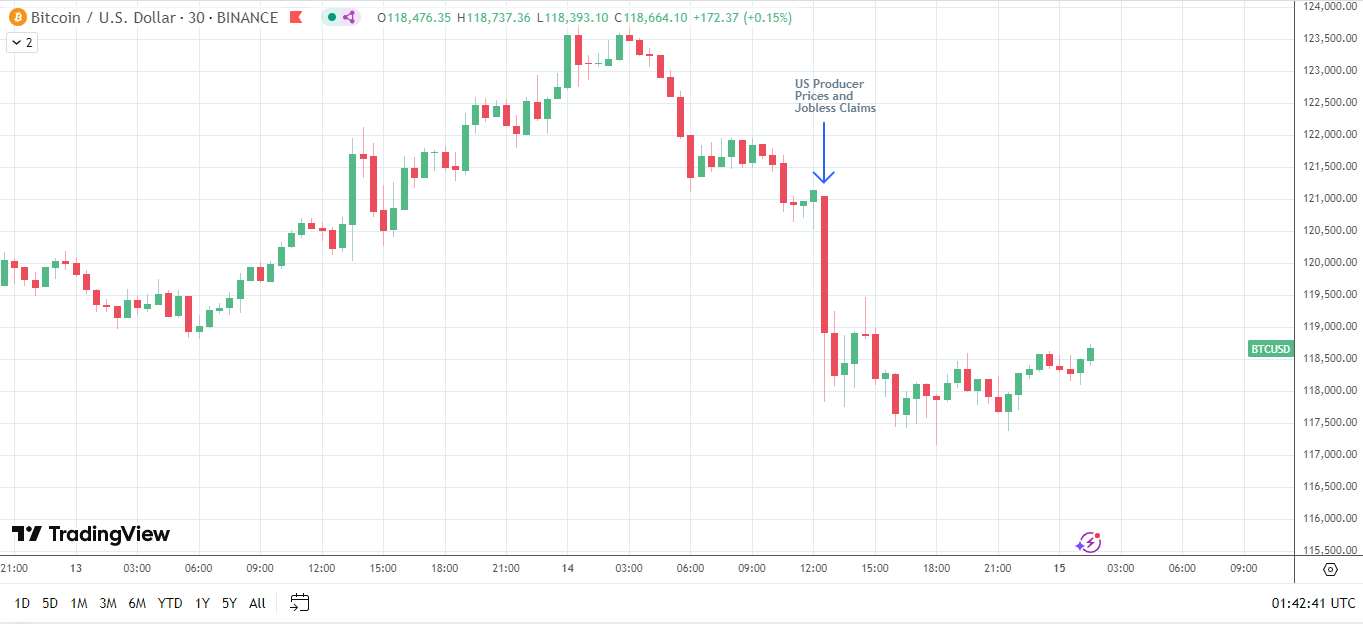
In the broader crypto markets, Bitcoin also encountered turbulence. A higher-than-expected jump in U.S. producer prices signaled rising inflation prospects. This spurred concerns that the Federal Reserve may delay interest rate cuts, affecting investor appetite for risk assets like BTC. Bitcoin dropped 1.83% following the report, dipping to a low of $117,161 before modest recovery.
Spot BTC ETFs weren’t spared from this shift in sentiment. With net outflows reaching nearly $293 million, demand softened. ARK’s Bitcoin ETF saw heavy redemptions, while only Fidelity’s product recorded net inflows. These figures suggest that the Fed’s monetary stance and inflation trends will remain pivotal for BTC and by extension, crypto ETF markets at large.
Related: XRP Price: $12M Max Pain for Bears
The broader narrative emerging is one of transition. Regulatory clarity, both from the SEC’s framework and through legislative channels like the CLARITY Act, is likely to shape how crypto ETFs develop over the coming months. For XRP, in particular, the landscape appears to be opening up, with institutional access potentially expanding rapidly should the framework be finalized.
Quick Summary
XRP is once again in the spotlight as developments surrounding U.S. regulatory frameworks suggest a potential breakthrough in launching a spot XRP ETF. Recent activity across crypto markets highlights how regulatory clarity could significantly influence institutional adoption of XRP, particularly through ETFs.
Source
Information sourced from official Ripple publications, institutional research, regulatory documentation and reputable crypto news outlets.
Author
Ripple Van Winkle is a cryptocurrency analyst and founder of XRP Right Now. He has been active in the crypto space for over 8 years and has generated more than 25 million views across YouTube covering XRP daily.
Editorial Note
Opinions are the author's alone and for informational purposes only. This publication does not provide investment advice.

