







The Bitcoin hashrate surged 4% during the first half of August, reaching an average processing power of 937 exahashes per second (EH/s), according to a recent report by JPMorgan. The hashrate measures the total computing power deployed across the Bitcoin network to validate transactions and add new blocks.
The Bitcoin hashrate surged 4% during the first half of August, reaching an average processing power of 937 exahashes per second (EH/s), according to a recent report by JPMorgan.
The hashrate measures the total computing power deployed across the Bitcoin network to validate transactions and add new blocks. As a key benchmark for mining activity and competition, a rising hashrate often translates into greater mining difficulty and infrastructure investment.
How the Bitcoin Mining Landscape Is Evolving
U.S.-listed Bitcoin mining companies saw their combined hashrate jump an impressive 94% year-over-year. That growth outpaced the broader network expansion of 48%, according to the JPMorgan research. These American miners now contribute 33.6% of the overall global hashrate—the highest share on record.
The report points to heightened investment and scaling by public miners as a key factor in this increase, elevating the United States’ role in the global mining ecosystem.
Profitability Trends and Revenue Metrics
Despite the growth in network participation, individual mining profitability saw a slight decline. According to analysts Reginald Smith and Charles Pearce, miners earned approximately $56,300 in block rewards per EH/s daily during early August, representing a modest 2% decrease compared to July figures.
Similarly, the hashprice—a measure of how much revenue miners earn daily relative to their hashrate—also slid by 2% over the same period. These changes suggest a more competitive environment where increased infrastructure doesn’t immediately translate to higher profits.
Market Performance of Public Mining Firms
The total market capitalization of the mining companies covered in JPMorgan’s analysis rose by 6%, bringing their cumulative value to approximately $33.7 billion. This gain was buoyed by a strong showing from firms with high-performance computing (HPC) capabilities.

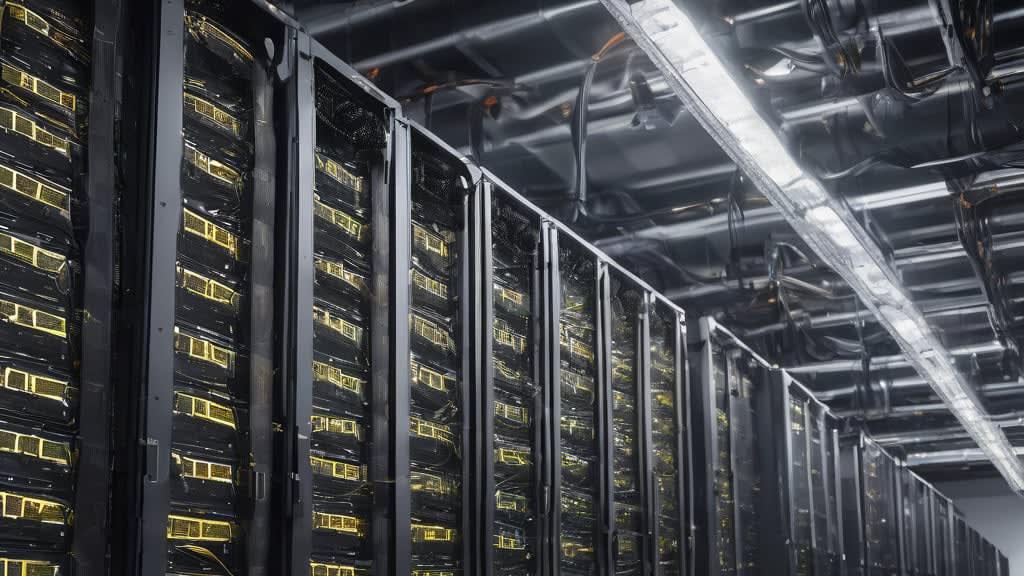
Bitcoin mining data center equipped with advanced HPC infrastructure powering increased network hashrate.
A key standout was TeraWulf (WULF), which soared 74% in the first half of August. The company’s rally followed news of a $3.7 billion AI hosting colocation agreement with Fluidstack and a strategic stake acquired by tech behemoth Google (GOOG).
Conversely, Riot Platforms (RIOT) underperformed its peers, experiencing a 16% setback during the same period—underscoring the widening performance gap within the sector.
Looking Ahead for Bitcoin Miners
As the Bitcoin network grows more competitive and integrated with technologies like HPC and AI, miners must continuously evolve to remain profitable. Sustained investment, strategic partnerships, and energy efficiency will likely define winners in the upcoming quarters.
Despite short-term headwinds in profitability, the longer-term trends point to an increasingly institutionalized mining sector—especially in the United States.
Related: Cardano Bull Setup Points to December Rally
Read more: Bitcoin Mining Profitability Rose 2% in July Amid BTC Price Rally, Jefferies Says
Quick Summary
The Bitcoin hashrate surged 4% during the first half of August, reaching an average processing power of 937 exahashes per second (EH/s), according to a recent report by JPMorgan. The hashrate measures the total computing power deployed across the Bitcoin network to validate transactions and add new blocks.
Source
Information sourced from official Ripple publications, institutional research, regulatory documentation and reputable crypto news outlets.
Author
Ripple Van Winkle is a cryptocurrency analyst and founder of XRP Right Now. He has been active in the crypto space for over 8 years and has generated more than 25 million views across YouTube covering XRP daily.
Editorial Note
Opinions are the author's alone and for informational purposes only. This publication does not provide investment advice.

