








Bitcoin experienced a sharp rejection at the $94,000 level, leading to a significant price correction. Altcoins followed Bitcoin’s downward trend, with many experiencing notable losses. The overall crypto market capitalization decreased by approximately $60 billion, reflecting the broad market downturn.
What to Know:
- Bitcoin experienced a sharp rejection at the $94,000 level, leading to a significant price correction.
- Altcoins followed Bitcoin’s downward trend, with many experiencing notable losses.
- The overall crypto market capitalization decreased by approximately $60 billion, reflecting the broad market downturn.
Bitcoin’s recent struggle to maintain its upward momentum has caught the attention of institutional investors and active traders alike. After several attempts to breach the $94,000 resistance, the cryptocurrency faced a sharp rejection, triggering a market-wide sell-off. This development underscores the inherent volatility within the digital asset space and the importance of closely monitoring key resistance levels.
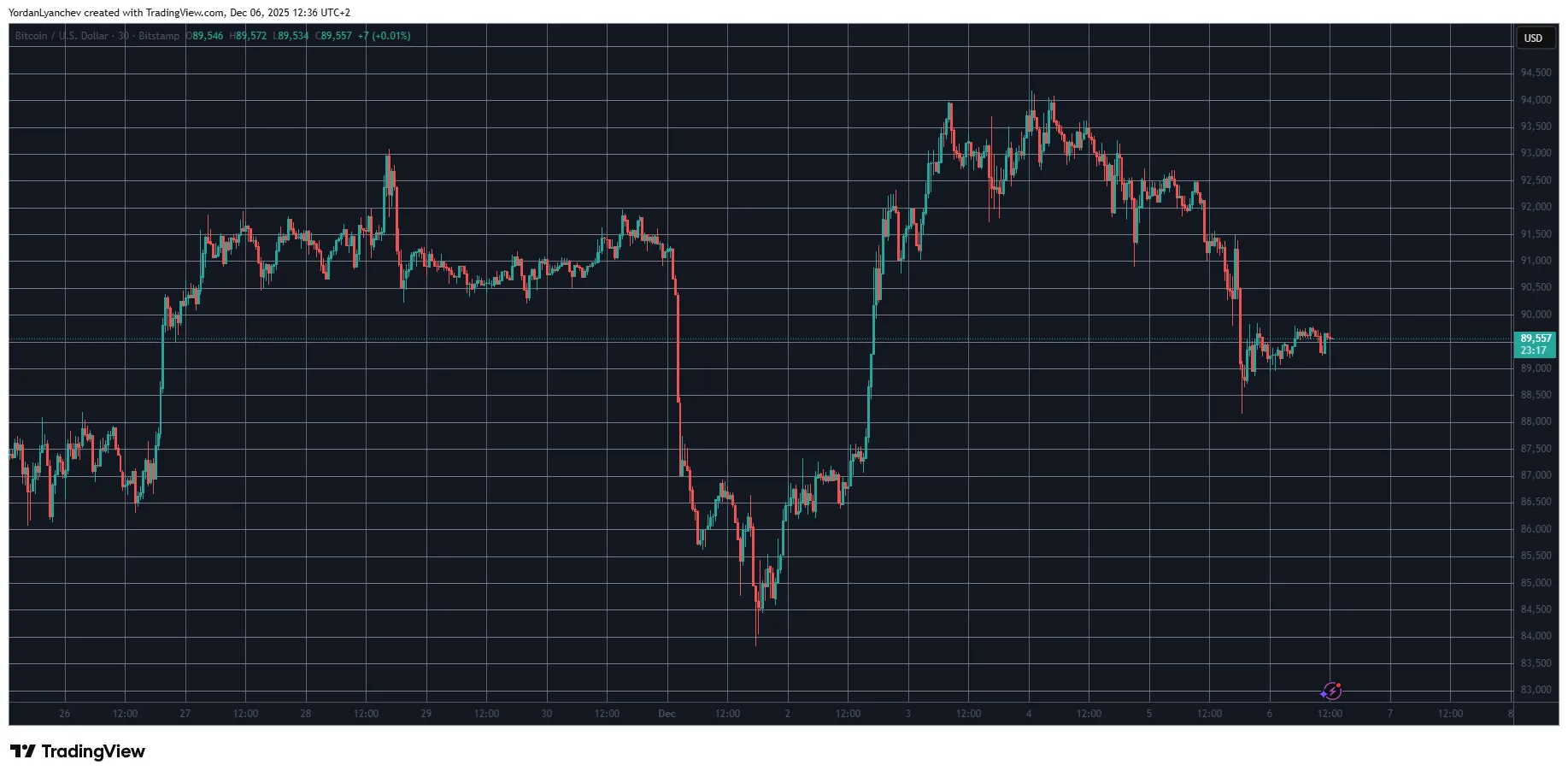
The first week of December has proven challenging for Bitcoin, with an initial recovery followed by renewed bearish pressure. After rebounding from a November crash, Bitcoin briefly surpassed $91,000, only to be met with resistance. A subsequent decline saw BTC plummet to nearly $84,000 before recovering to the $90,000 range. This whipsaw action highlights the ongoing tug-of-war between bulls and bears, creating opportunities for nimble traders but also posing risks for those with less experience.
The failure to break through the $94,000 resistance level is particularly noteworthy. Resistance levels often act as psychological barriers, where sellers are more likely to step in and take profits. In this case, the repeated rejections at $94,000 suggest a significant supply overhang, requiring substantial buying pressure to overcome. Until this level is decisively breached, Bitcoin may remain range-bound or vulnerable to further downside.
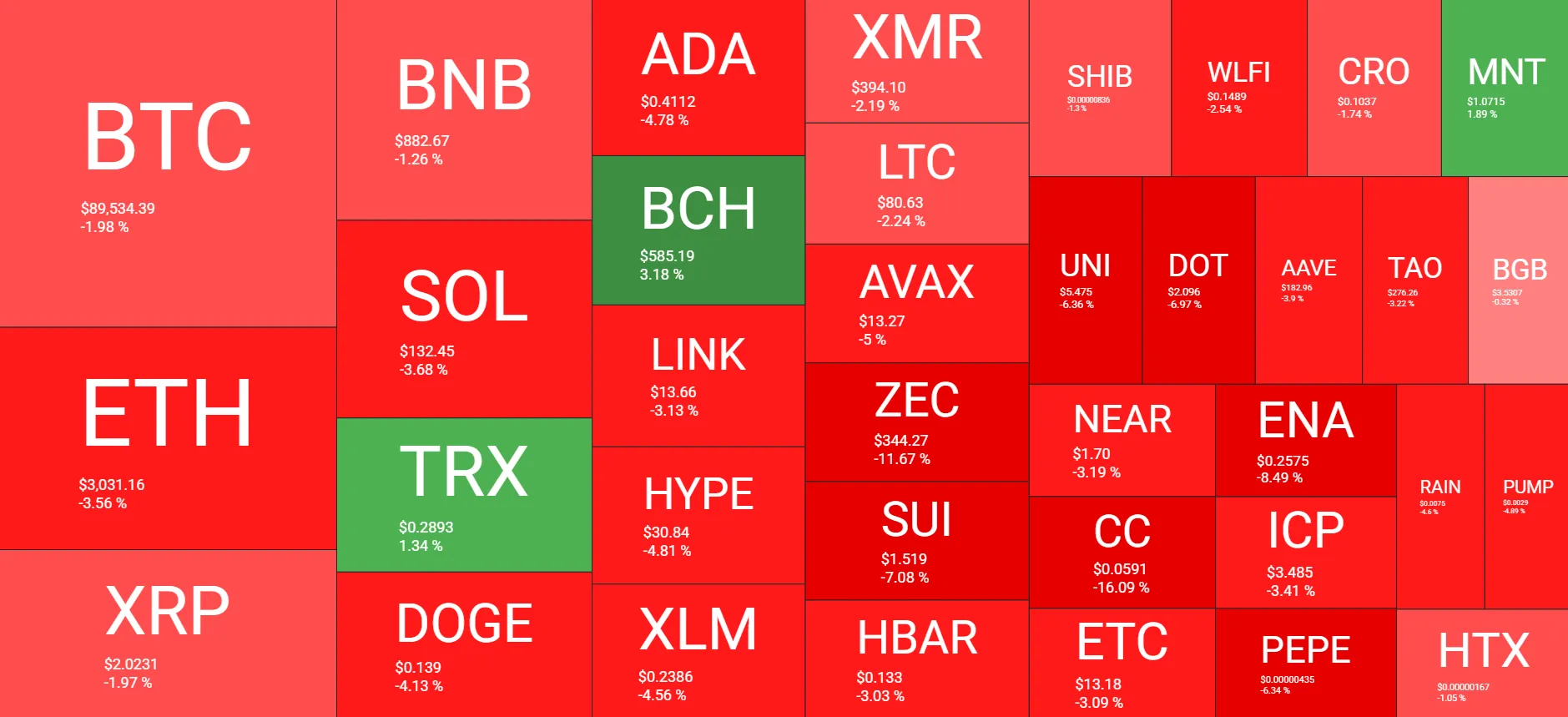
The altcoin market has largely mirrored Bitcoin’s struggles, with most major cryptocurrencies experiencing declines. Ethereum, for example, is hovering just above $3,000 after a 3.4% drop, while XRP is nearing a break below $2.00. This correlation between Bitcoin and altcoin performance is a common phenomenon in the crypto market, as Bitcoin often serves as a bellwether for the broader asset class. However, it’s important to note that individual altcoins can deviate from this trend based on their own specific fundamentals and market dynamics.
The recent market downturn has triggered significant liquidations, with over $500 million wiped out. Liquidations occur when leveraged positions are forcibly closed due to insufficient margin, exacerbating price declines. This highlights the risks associated with high-leverage trading, particularly in a volatile market like crypto. Institutional investors tend to be more cautious with leverage, but even sophisticated traders can be caught off guard by sudden market swings.
Despite the recent pullback, it’s important to maintain a long-term perspective. The crypto market has historically been prone to cycles of boom and bust, but each cycle has generally led to higher highs and higher lows. The increasing institutional adoption of Bitcoin, coupled with the ongoing development of the Ethereum ecosystem, suggests that the long-term outlook for digital assets remains positive. The launch of Bitcoin ETFs, for example, has opened up the market to a wider range of investors, providing a new source of demand.
Looking ahead, several factors could influence the direction of the crypto market. Macroeconomic conditions, such as inflation and interest rates, will continue to play a role. Regulatory developments, particularly in the United States and Europe, could also have a significant impact. And of course, unforeseen events, such as technological breakthroughs or security breaches, could always disrupt the market.
In conclusion, Bitcoin’s recent rejection at $94,000 and the subsequent market downturn serve as a reminder of the inherent volatility within the digital asset space. While the short-term outlook remains uncertain, the long-term fundamentals of crypto remain strong. Institutional investors should continue to monitor market developments closely and adjust their strategies accordingly, focusing on risk management and diversification.
Related: XRP Price: Fortune 500 Impact on Balance Sheets
Source: Original article
Quick Summary
Bitcoin experienced a sharp rejection at the $94,000 level, leading to a significant price correction. Altcoins followed Bitcoin’s downward trend, with many experiencing notable losses. The overall crypto market capitalization decreased by approximately $60 billion, reflecting the broad market downturn.
Source
Information sourced from official Ripple publications, institutional research, regulatory documentation and reputable crypto news outlets.
Author
Ripple Van Winkle is a cryptocurrency analyst and founder of XRP Right Now. He has been active in the crypto space for over 8 years and has generated more than 25 million views across YouTube covering XRP daily.
Editorial Note
Opinions are the author's alone and for informational purposes only. This publication does not provide investment advice.

