








Ethereum is coiling within a compression phase, suggesting a significant price move is imminent. XRP is at a critical juncture, needing to establish stronger support to confirm a genuine reversal. Bitcoin is making a notable third attempt at the $90,000 level, but faces overhead resistance from key moving averages.
What to Know:
- Ethereum is coiling within a compression phase, suggesting a significant price move is imminent.
- XRP is at a critical juncture, needing to establish stronger support to confirm a genuine reversal.
- Bitcoin is making a notable third attempt at the $90,000 level, but faces overhead resistance from key moving averages.
Ethereum, XRP, and Bitcoin are each at critical junctures, presenting distinct opportunities and risks for institutional investors. Ethereum is compressing, XRP is struggling to find footing, and Bitcoin is testing a key resistance level. Understanding these nuances is crucial for navigating the digital asset landscape effectively.
Ethereum’s Volatility Squeeze
Ethereum’s price action is increasingly confined between an ascending trendline and descending moving averages, a classic sign of compression. This pattern indicates that volatility is decreasing, setting the stage for a potentially explosive move. The squeeze suggests that the market is awaiting a catalyst, whether a fundamental development or a technical breakout, to determine the next direction.
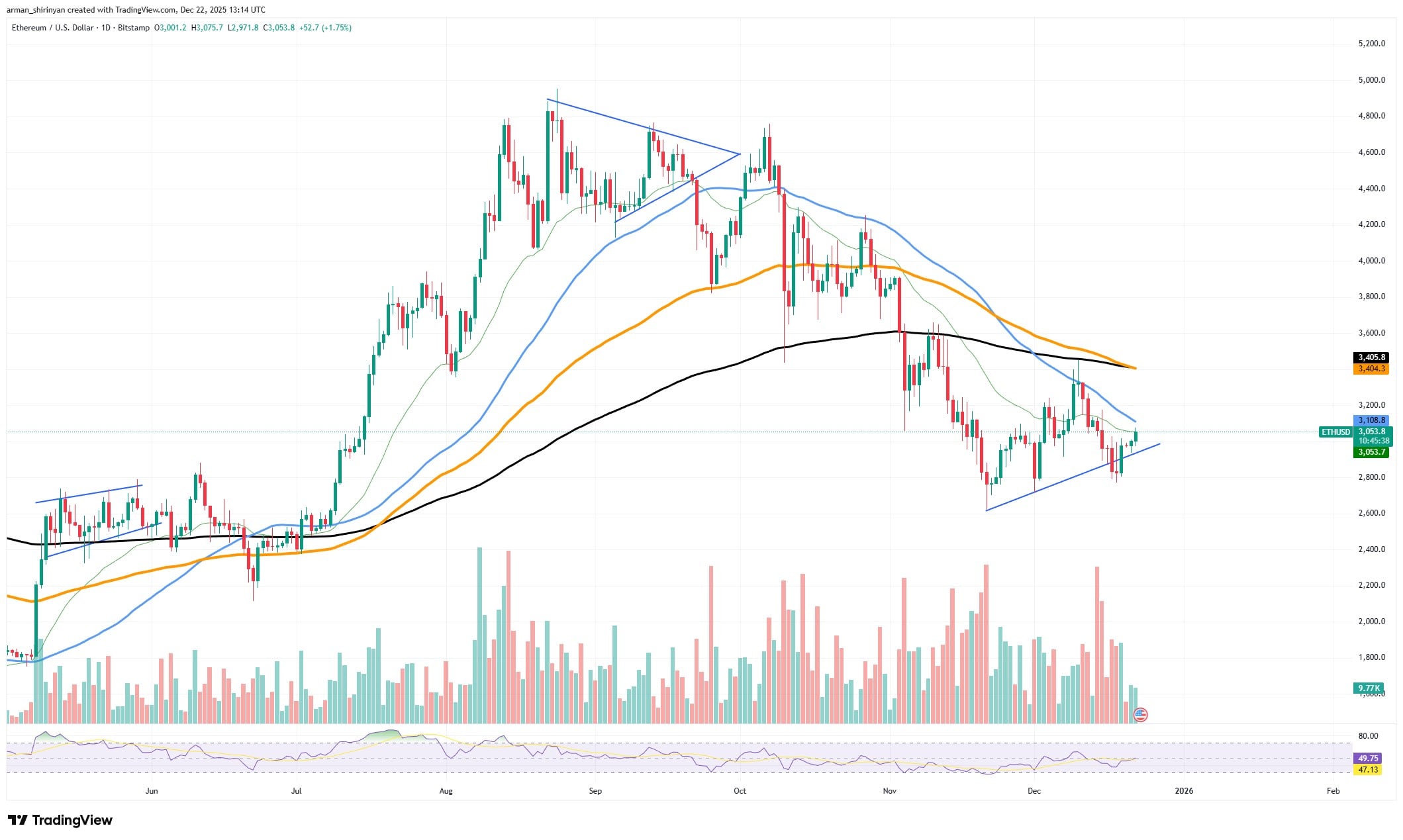
For institutional players, this presents a strategic entry point, but timing is critical. A break above the descending moving average could signal a shift in market sentiment, attracting sidelined capital and triggering short covering. Conversely, a breakdown below the rising trendline could lead to a sharp decline, invalidating the higher-low structure. Similar compression patterns have preceded significant moves in other assets, highlighting the importance of monitoring volume and order book depth for confirmation.
XRP’s Struggle for Reversal
XRP finds itself in a precarious position, needing to establish stronger support to validate any potential reversal. Currently, the price action suggests hesitancy, with neither aggressive selling nor strong buying pressure dominating. The asset remains below key moving averages, indicating that the overall trend is still corrective. This lack of conviction raises concerns about the sustainability of any short-term rallies.
From an institutional perspective, XRP’s inability to overcome key moving averages signals caution. The 50-day, 100-day, and 200-day moving averages form a layered resistance zone, suggesting that significant buying pressure is needed to overcome this overhead supply. Without a decisive break above these levels, any bounce is likely to be a countertrend move, offering limited upside potential. The current compression within a descending channel further underscores the need for a catalyst to drive a sustained recovery.
Bitcoin’s $90,000 Test
Bitcoin is once again challenging the $90,000 level, marking its third attempt to breach this significant psychological barrier. This repeated testing suggests underlying intent, but the mixed signals in the market make the outcome uncertain. While Bitcoin has recovered the $88,000-$89,000 range, it faces overhead resistance from key moving averages, creating a compression zone that limits upward progress.
For institutional investors, Bitcoin’s struggle to decisively break $90,000 presents a nuanced scenario. The recovery from a liquidation-driven sell-off, followed by consolidation, indicates resilience. However, the 50-day, 100-day, and 200-day moving averages sloping downward above the price continue to act as a macro filter. Similar to previous attempts, Bitcoin needs a clear daily close above $90,000 with strong volume to confirm a breakout.
Market Sentiment and Future Outlook
The broader market sentiment, as reflected in momentum indicators and prediction markets, adds another layer of complexity. The Relative Strength Index (RSI) is rebounding from oversold territory but has yet to enter bullish expansion mode, aligning with the chart’s depiction of stabilization rather than acceleration. This suggests that Bitcoin is neither decisively weak nor convincingly strong.
Prediction markets like Kalshi reflect this skepticism, with traders largely discounting a near-term breakout to six figures. This measured outlook underscores the importance of fundamental developments, such as regulatory clarity or increased institutional adoption, to drive the next leg up. Without these catalysts, Bitcoin risks falling back into its established range, making $90,000 another unsuccessful breakout attempt.
In conclusion, Ethereum, XRP, and Bitcoin each present unique challenges and opportunities for institutional investors. Ethereum’s compression phase suggests a significant price move is on the horizon, while XRP struggles to establish a genuine reversal. Bitcoin’s repeated attempts at $90,000 highlight the importance of decisive breakouts and fundamental catalysts. Navigating these assets requires careful analysis, strategic timing, and a deep understanding of market dynamics.
Related: XRP Liquidity Signals a Potential Buy
Source: Original article
Quick Summary
Ethereum is coiling within a compression phase, suggesting a significant price move is imminent. XRP is at a critical juncture, needing to establish stronger support to confirm a genuine reversal. Bitcoin is making a notable third attempt at the $90,000 level, but faces overhead resistance from key moving averages.
Source
Information sourced from official Ripple publications, institutional research, regulatory documentation and reputable crypto news outlets.
Author
Ripple Van Winkle is a cryptocurrency analyst and founder of XRP Right Now. He has been active in the crypto space for over 8 years and has generated more than 25 million views across YouTube covering XRP daily.
Editorial Note
Opinions are the author's alone and for informational purposes only. This publication does not provide investment advice.

