








Key takeaway #1 — Despite bullish events like the SEC lawsuit resolution and spot ETF launches, XRP price underperformed in 2025. Key takeaway #2 summarizing major data: Low network activity and lack of sustained buying pressure indicate weak demand for XRP.
What to Know:
- Key takeaway #1 — Despite bullish events like the SEC lawsuit resolution and spot ETF launches, XRP price underperformed in 2025.
- Key takeaway #2 summarizing major data: Low network activity and lack of sustained buying pressure indicate weak demand for XRP.
- Key takeaway #3 explaining trader or institutional implications: Technical analysis suggests potential further downside for XRP in 2026, with some analysts predicting a drop below $1.
Despite several positive developments in 2025, including the resolution of the SEC lawsuit and the launch of spot ETFs, XRP’s price failed to reflect these milestones, experiencing a significant drop. The underperformance of XRP raises concerns about its ability to reach the coveted $5 price target in the near future. Weak demand, as evidenced by low network activity and a lack of sustained buying pressure, contributes to the pessimistic outlook for XRP.
XRP price did not reflect big milestones in 2025
Several bullish events anticipated by the XRP Army happened in 2025, but XRP continues to underperform the cryptocurrency market.
In March, XRP was listed as a candidate for the United States’ “Digital Asset Reserve,” sparking an initial price surge of over 30%. However, the executive order limited the stockpile to seized assets only (no new purchases), with Bitcoin favored separately.
This letdown contributed to limited sustained upside, offering symbolic legitimacy but no direct buying pressure going forward.
On May 8, Ripple Labs settled a years-long lawsuit with the US Securities and Exchange Commission (SEC), which was a key reason XRP soared to a seven-year high on July 18. But that momentum quickly faded, and the price dropped 25% to $2.73 less than two weeks later.
The last hope of a parabolic XRP rally in 2025 was institutional demand fueled by inflows into spot ETFs in the United States, which launched in November.
These investment products have recorded inflows for 24 consecutive days, with cumulative inflows rising to $1.06 billion and total assets under management to over $1.14 billion.
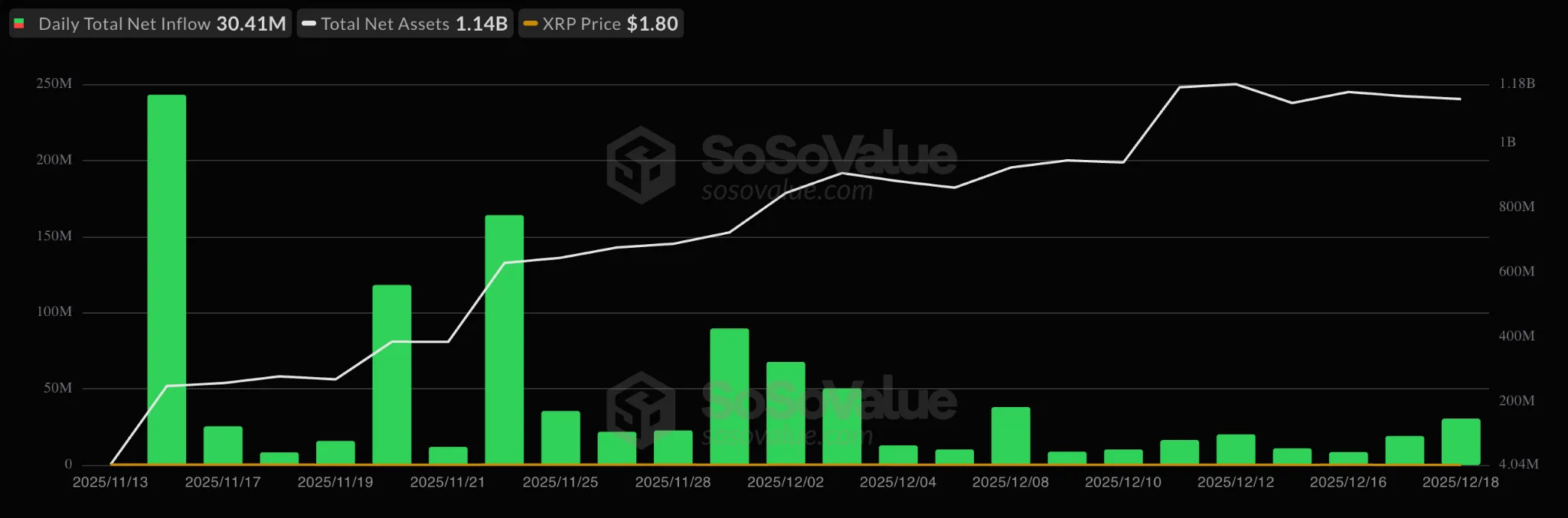
Such a strong start for XRP ETFs reflected confidence among institutional investors, but this has done little to lift trader sentiment regarding XRP price growth odds.
The Trump administration is likely to continue offering regulatory support for the crypto industry in 2026, and Ripple payments should also experience further growth through strategic partnerships.
But does XRP have a shot at reaching the $5 mark in the new year?
Can XRP price reach $5-$10 in 2026?
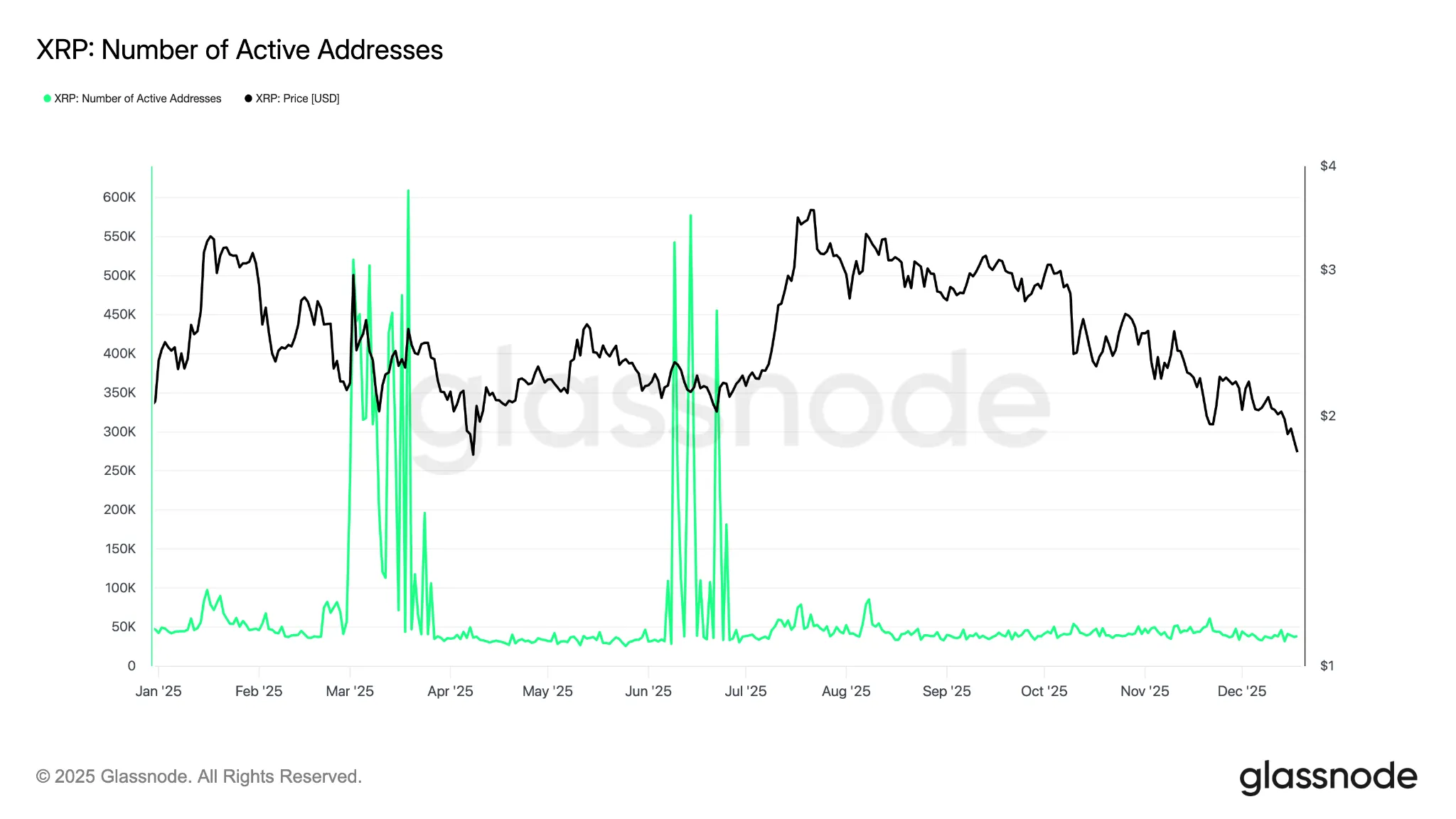
During the past six months, the number of daily active addresses (unique users) on the XRP Ledger has remained muted under 45,000. There were just 38,500 active addresses recorded on Dec. 18, a 94% drawdown from a 2025 peak of more than 600,000 addresses recorded in March.
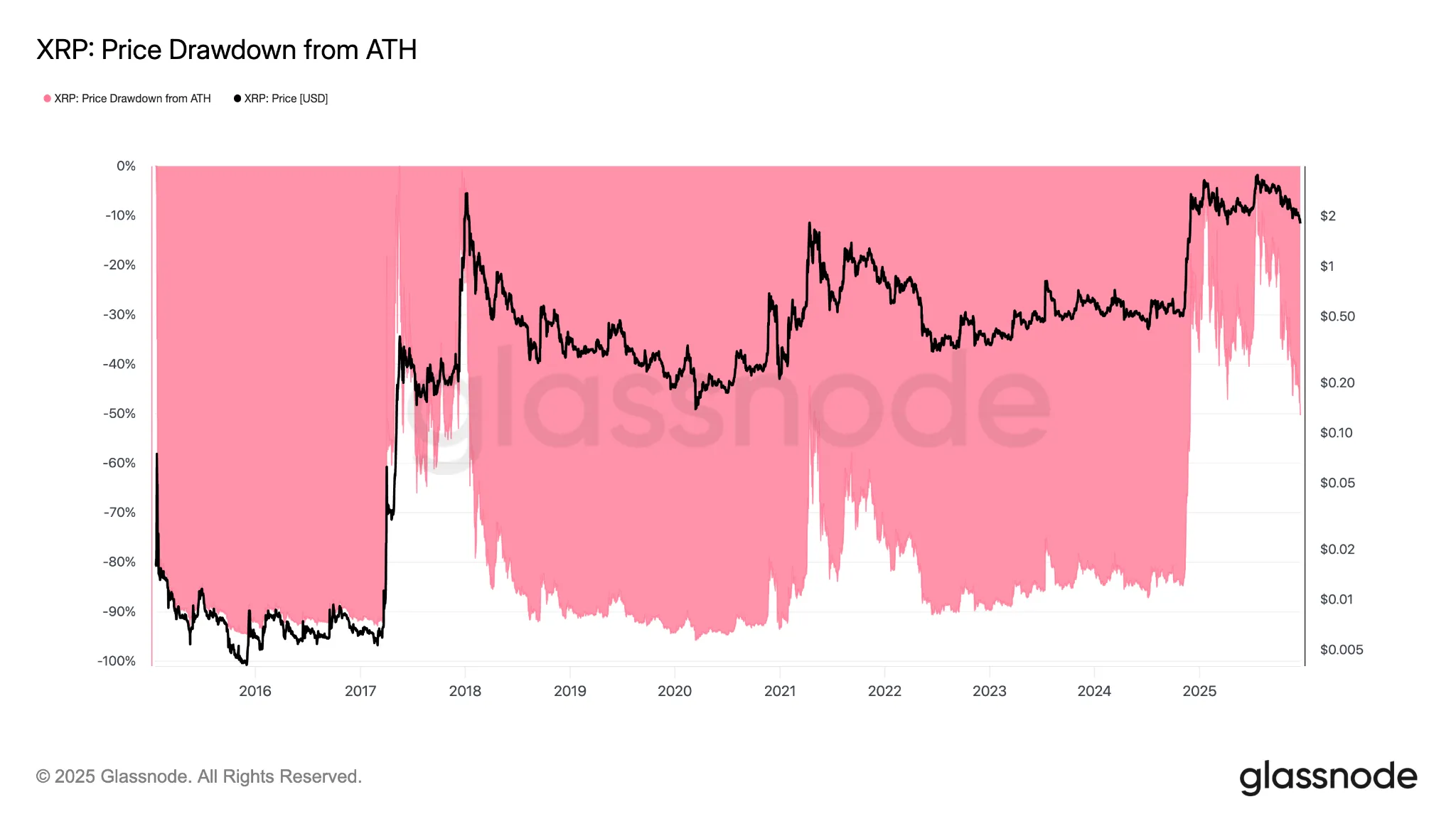
XRP lost over 90% of its value within 12 months of hitting its all-time high in 2018, and that was long before the SEC lawsuit.
Another decline of that magnitude is not out of the question, considering the token is already down more than 40% from its multi-year high above $3.66. In other words, it will be a tall order for XRP to reach $5 in 2026.
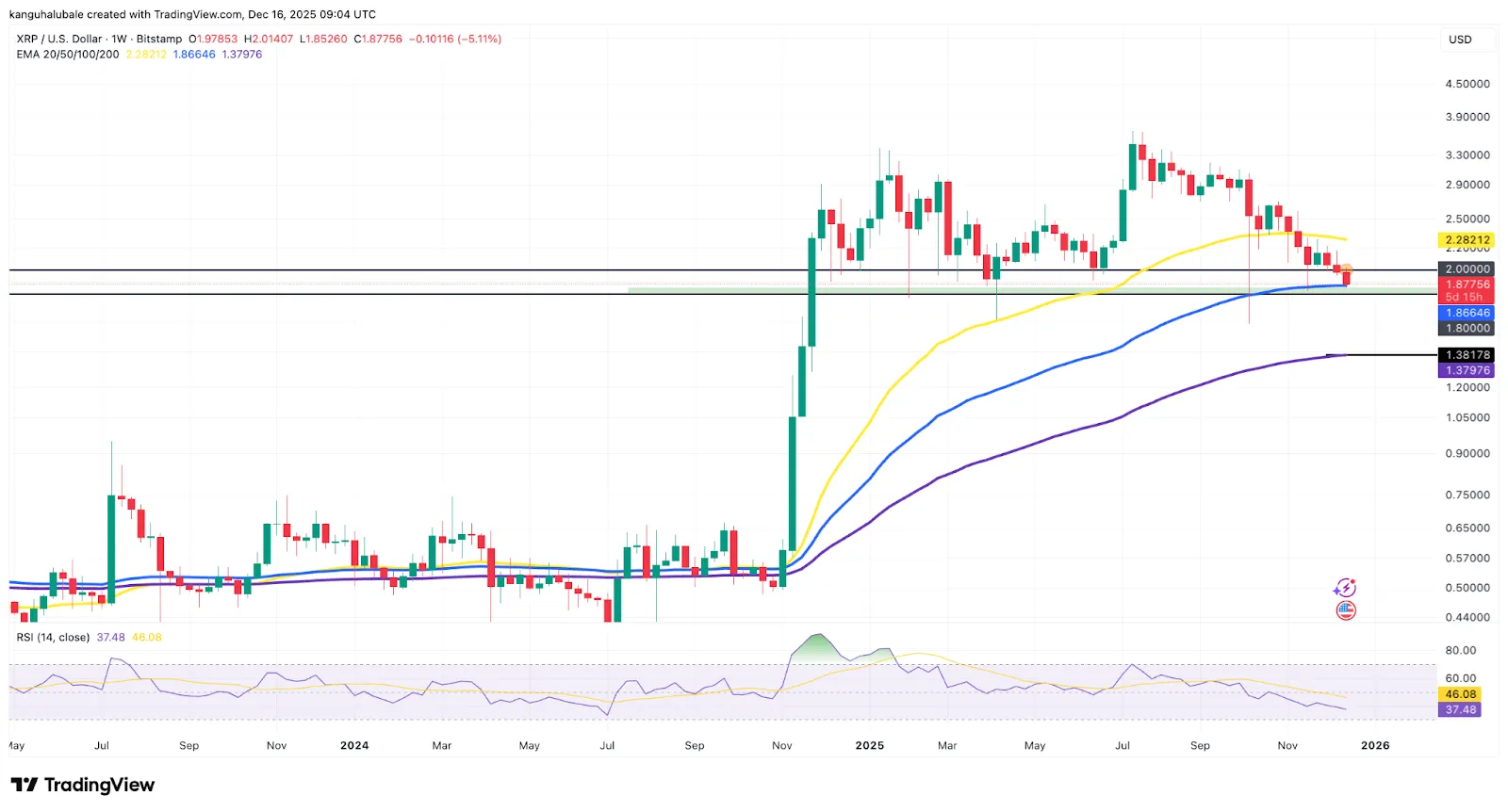
In fact, the technical setup shows that XRP could be heading much lower from here.
XRP has lost the key levels: The psychological level at $2 and the 50-week exponential moving average (SMA) at $1.87, a signal that previously marked cycle peaks.
A key area of interest lies between the 100-week EMA currently at $1.85 and $1.80 (the Nov. 21 low), which, if lost, would trigger another cascade of long liquidations, with local lows at $1.61 being the next area of interest.
Below that, the 200-day EMA $1.38 could provide some respite, where the bulls could regroup before making another attempt at recovery.
How are XRP ETF flows impacting price action?
The launch of XRP ETFs was expected to drive institutional investment and boost the price of XRP. While these ETFs have experienced consistent inflows, their impact on the price action of XRP has been limited.
This suggests that the demand generated by the ETFs may not be sufficient to offset the selling pressure from other market participants. Additionally, the overall market sentiment towards XRP remains cautious, which could be hindering the positive impact of ETF inflows.
Monitoring the ETF flows and their correlation with XRP’s price will be crucial in assessing the long-term impact of these investment products. Furthermore, the performance of XRP ETFs could influence the approval and launch of similar products for other cryptocurrencies.
The derivatives data surrounding XRP also paints a mixed picture. While the funding rates are generally positive, indicating a bullish bias among traders, the trading volume on derivatives exchanges remains relatively low. This suggests that the market is not fully convinced of XRP’s potential for significant price appreciation.
Analyzing the open interest and liquidation levels in the XRP derivatives market can provide further insights into the positioning of traders and the potential for volatility.
Derivatives data and volatility analysis
The XRP derivatives market offers valuable insights into trader sentiment and potential price movements. Analyzing funding rates, open interest, and liquidation levels can help assess the overall market positioning and identify potential areas of volatility.
Positive funding rates suggest that traders are generally bullish on XRP, while negative funding rates indicate a bearish bias. However, it’s important to note that funding rates can be influenced by various factors, including market conditions and exchange policies.
Open interest, which represents the total number of outstanding derivative contracts, provides an indication of the level of participation in the XRP derivatives market. A rising open interest suggests increasing interest and liquidity, while a declining open interest may signal a lack of conviction among traders.
Liquidation levels, which refer to the price levels at which leveraged positions are automatically closed, can act as potential support or resistance levels. Monitoring these levels can help anticipate potential price swings and identify areas of high volatility.
The volatility of XRP has been relatively high compared to other major cryptocurrencies. This increased volatility can be attributed to factors such as regulatory uncertainty, market speculation, and the ongoing SEC lawsuit.
XRP Ledger activity and institutional sentiment
The activity on the XRP Ledger provides insights into the real-world usage and adoption of XRP. Analyzing metrics such as transaction volume, active addresses, and new accounts can help gauge the health and growth of the XRP ecosystem.
A decline in active addresses on the XRP Ledger suggests a decrease in user engagement and network activity. This could be a cause for concern, as it indicates a lack of demand for XRP and its underlying technology.
However, it’s important to consider that the XRP Ledger is also used for various other purposes, such as cross-border payments and asset tokenization. Therefore, a decline in active addresses may not necessarily reflect a decline in the overall utility of the XRP Ledger.
Institutional sentiment towards XRP plays a crucial role in its price performance. Positive sentiment from institutional investors can attract capital and drive up demand, while negative sentiment can lead to sell-offs and price declines.
The launch of XRP ETFs in the United States is a positive sign of increasing institutional interest. However, the limited impact of these ETFs on XRP’s price suggests that institutional sentiment remains cautious.
What are the key factors influencing XRP’s liquidity?
Liquidity is a critical factor that affects the price stability and trading efficiency of XRP. High liquidity allows for large orders to be executed without significantly impacting the price, while low liquidity can lead to increased volatility and wider bid-ask spreads.
The liquidity of XRP is influenced by various factors, including the number of exchanges listing XRP, the trading volume on those exchanges, and the depth of the order books. A greater number of exchanges and higher trading volumes generally contribute to higher liquidity.
Market makers also play a crucial role in providing liquidity by placing buy and sell orders on exchanges. Their presence helps to narrow the bid-ask spread and ensure that there are always buyers and sellers available.
Regulatory developments and legal challenges can also impact the liquidity of XRP. The ongoing SEC lawsuit has created uncertainty and discouraged some market participants from trading XRP, which has negatively affected its liquidity.
Macroeconomic factors, such as interest rates and inflation, can also influence the overall liquidity in the cryptocurrency market, including XRP.
Veteran trader Peter Brandt said the presence of a “potential double top” pattern could see XRP drop below $1 over the coming weeks or months.
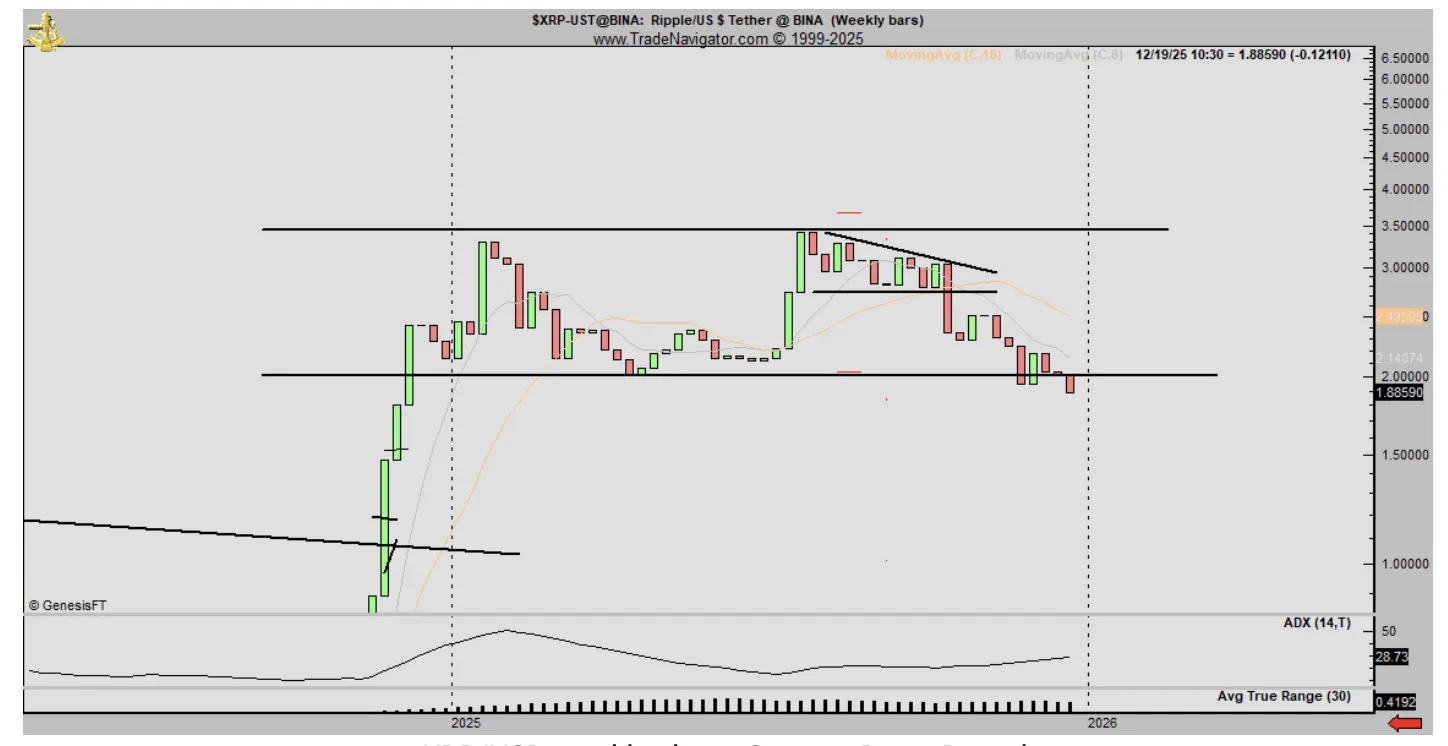
Conversely, other analysts, such as Chad Steingraber, are confident that the XRP price may grow “from $2 to $10” in 2026, citing persistent spot ETF inflows and more bullish technicals on higher time frames.
Despite positive developments like ETF launches and the resolution of the SEC lawsuit, XRP’s price underperformance in 2025 raises concerns about its future prospects. Technical analysis suggests potential further downside, and reaching the $5 target in 2026 appears challenging given current market dynamics and network activity. Whether XRP can overcome these hurdles remains to be seen.
Related: Crypto Funding Rate Signals Market Turn
Source: Original article
Quick Summary
Key takeaway #1 — Despite bullish events like the SEC lawsuit resolution and spot ETF launches, XRP price underperformed in 2025. Key takeaway #2 summarizing major data: Low network activity and lack of sustained buying pressure indicate weak demand for XRP.
Source
Information sourced from official Ripple publications, institutional research, regulatory documentation and reputable crypto news outlets.
Author
Ripple Van Winkle is a cryptocurrency analyst and founder of XRP Right Now. He has been active in the crypto space for over 8 years and has generated more than 25 million views across YouTube covering XRP daily.
Editorial Note
Opinions are the author's alone and for informational purposes only. This publication does not provide investment advice.

