










Bitcoin’s mining difficulty adjustment offers insights into miner economics and competitive pressures. Hashprice, representing revenue per unit of hashpower, is a crucial metric for assessing miner profitability.
What to Know:
- Bitcoin’s mining difficulty adjustment offers insights into miner economics and competitive pressures.
- Hashprice, representing revenue per unit of hashpower, is a crucial metric for assessing miner profitability.
- The rise of AI data centers is intensifying competition for energy resources, impacting Bitcoin mining’s profitability and strategies.
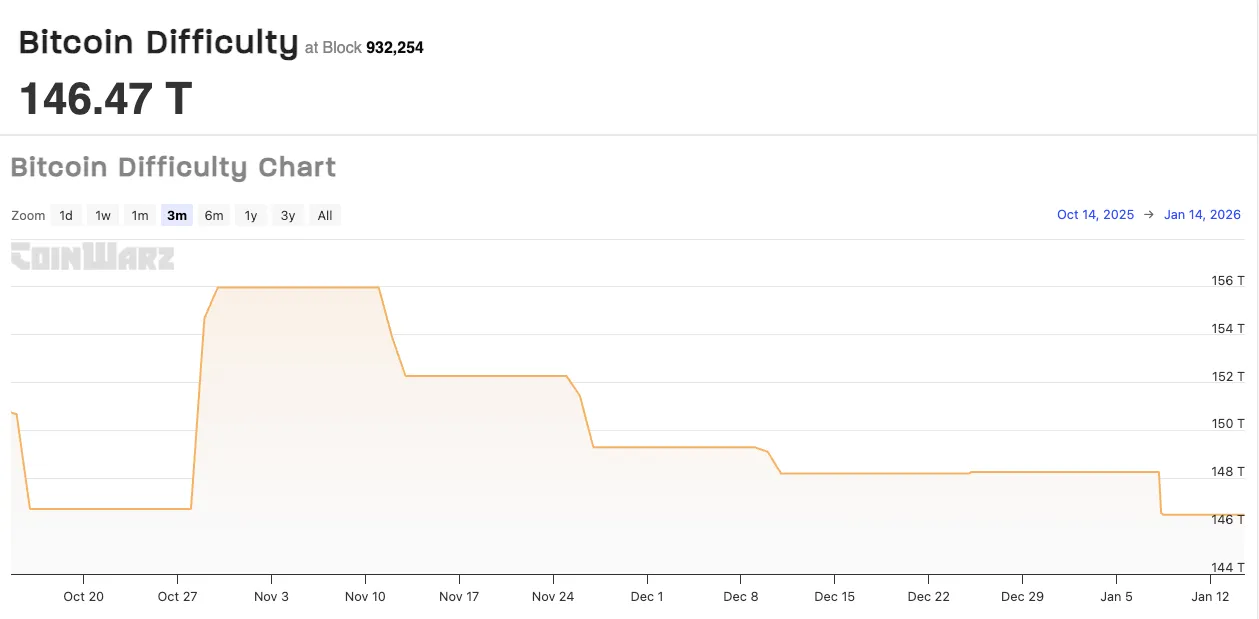
The recent Bitcoin difficulty adjustment to 146.4 trillion, while seemingly small, provides valuable insight into the state of the mining industry. Bitcoin’s difficulty adjusts roughly every two weeks, recalibrating the effort needed to mine a block and maintain a consistent block creation rate. This adjustment reflects the dynamic interplay between miners, their operational costs, and the overall Bitcoin ecosystem.
When mining difficulty decreases, it often signals that some miners have ceased operations, typically due to economic or operational challenges. This can be attributed to the post-halving environment, where miners receive less Bitcoin per block, and increasing competition for available rewards.
Hashprice offers a comprehensive view of miner profitability by compressing block rewards, fees, difficulty, and Bitcoin price into a single metric. Monitoring hashprice alongside difficulty adjustments provides a more complete picture of the economic pressures miners face and their potential responses.
The consolidation wave within the Bitcoin mining industry reflects the Darwinian nature of the business, where profitability tightening leads to bankruptcies, asset sales, and takeovers. This consolidation is further influenced by the increasing value of power, driven by the growing demand from AI data centers.
AI’s increasing demand for energy is reshaping the economics of Bitcoin mining, as data centers compete for the same resources. This competition could potentially shift miners’ focus from hashing to hosting, leveraging their infrastructure and power resources in new ways.
Related: Crypto Recap: Senate Delays Bill
Source: Original article
Quick Summary
Bitcoin’s mining difficulty adjustment offers insights into miner economics and competitive pressures. Hashprice, representing revenue per unit of hashpower, is a crucial metric for assessing miner profitability. The rise of AI data centers is intensifying competition for energy resources, impacting Bitcoin mining’s profitability and strategies.
Source
Information sourced from official Ripple publications, institutional research, regulatory documentation and reputable crypto news outlets.
Author
Ripple Van Winkle is a cryptocurrency analyst and founder of XRP Right Now. He has been active in the crypto space for over 8 years and has generated more than 25 million views across YouTube covering XRP daily.
Editorial Note
Opinions are the author's alone and for informational purposes only. This publication does not provide investment advice.

