








XRP has experienced a notable price decline, dropping to a 90-day low, reflecting broader market volatility and caution. A “death cross” formation on XRP’s chart has triggered bearish sentiment, contributing to selling pressure and impacting price levels.
What to Know:
- XRP has experienced a notable price decline, dropping to a 90-day low, reflecting broader market volatility and caution.
- A “death cross” formation on XRP’s chart has triggered bearish sentiment, contributing to selling pressure and impacting price levels.
- Despite price declines, on-chain data suggests that XRP whales are accumulating, indicating potential confidence in a future price reversal.
XRP has recently faced significant headwinds, mirroring the broader uncertainty gripping the digital asset market. The token’s price has retraced to levels not seen in three months, with technical indicators flashing warning signs for institutional investors. As regulatory scrutiny intensifies and macro conditions remain uncertain, understanding XRP’s market dynamics is crucial for informed decision-making.
Technical Indicators and Price Action
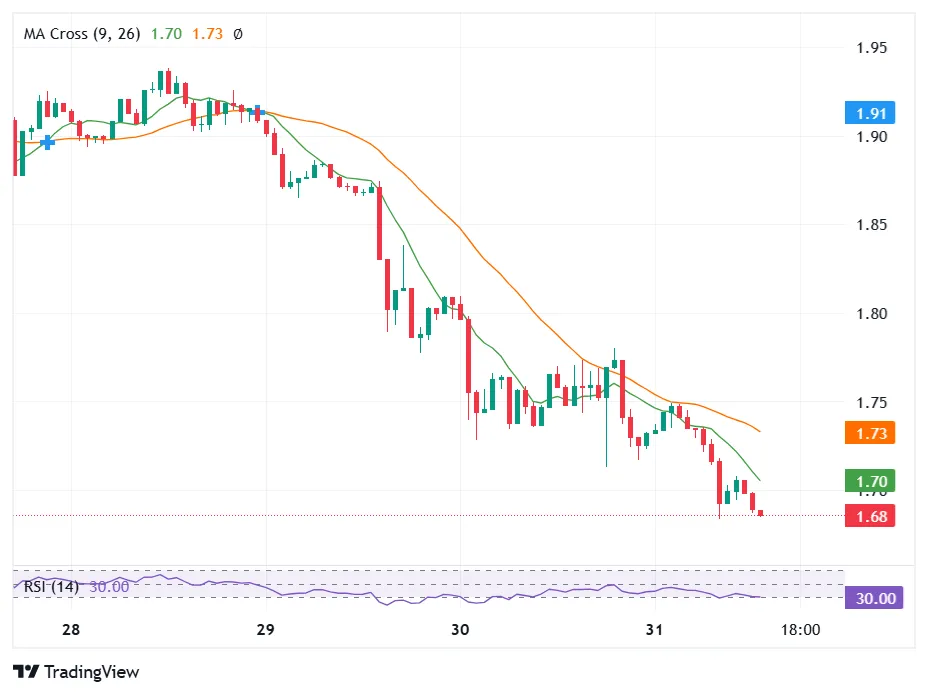
The formation of a “death cross,” where the short-term moving average dips below the long-term moving average, is a classic bearish signal that has spooked XRP holders. This pattern often precedes further price declines as algorithmic traders and technical analysts adjust their positions. The initial breach of the $2 support level exacerbated selling pressure, pushing XRP to its recent lows. Institutional desks are closely monitoring these technical levels to gauge potential entry and exit points, but the overall risk-off sentiment is palpable.
Volume and Liquidity Dynamics
A decline in trading volume often accompanies price drops, signaling a lack of conviction among buyers. XRP’s 20% drop in trading volume reflects this hesitancy, potentially driven by Bitcoin’s increasing dominance and a general market-wide risk aversion. Reduced liquidity can amplify price swings, making it more challenging for large institutional orders to be filled without significantly impacting the market. This environment underscores the need for sophisticated trading strategies and careful risk management.
Whale Accumulation and On-Chain Activity
Despite the bearish price action, data from the XRP Ledger reveals increased transaction counts, suggesting that large holders, or “whales,” are accumulating XRP during the dip. This behavior could indicate a belief that the current price levels offer a buying opportunity, with whales positioning themselves for a potential future rally. However, it’s crucial to remember that whale activity alone doesn’t guarantee a price reversal, and these large holders could also be strategically managing their positions in anticipation of further volatility.
Sentiment and Market Outlook
The broader crypto market sentiment plays a significant role in XRP’s price trajectory. News flow, regulatory developments, and macroeconomic factors all contribute to the overall risk appetite of investors. While some high-profile figures like Dave Portnoy have publicly expressed bullish sentiment and made significant XRP purchases, the prevailing mood remains cautious. The historical underperformance of XRP in February adds another layer of concern, highlighting the importance of considering seasonal trends and historical data in investment strategies.
Regulatory Considerations and Long-Term Prospects
XRP’s long-term prospects are intertwined with the ongoing regulatory landscape, particularly the SEC’s lawsuit against Ripple. Clarity on the regulatory front could significantly boost investor confidence and unlock institutional adoption. Conversely, continued uncertainty could weigh on XRP’s price and limit its potential. Institutional investors are closely watching these developments, as regulatory certainty is a crucial factor in their asset allocation decisions.
Derivatives Positioning and Risk Management
The derivatives market provides valuable insights into investor sentiment and potential price movements. Analyzing open interest, funding rates, and option skews can help assess the level of bullish or bearish positioning and identify potential areas of risk. Monitoring these metrics is essential for institutional traders looking to manage their exposure and navigate the complexities of the digital asset market.
In conclusion, XRP’s recent price decline and bearish technical signals warrant caution, but on-chain data reveals potential accumulation by large holders. Navigating this complex landscape requires a deep understanding of market dynamics, regulatory considerations, and risk management strategies. As always, investors should conduct thorough due diligence and consult with financial professionals before making any investment decisions.
Related: XRP Futures Data Signals Bearish Trend Defiance
Source: Original article
Quick Summary
XRP has experienced a notable price decline, dropping to a 90-day low, reflecting broader market volatility and caution. A “death cross” formation on XRP’s chart has triggered bearish sentiment, contributing to selling pressure and impacting price levels.
Source
Information sourced from official Ripple publications, institutional research, regulatory documentation and reputable crypto news outlets.
Author
Ripple Van Winkle is a cryptocurrency analyst and founder of XRP Right Now. He has been active in the crypto space for over 8 years and has generated more than 25 million views across YouTube covering XRP daily.
Editorial Note
Opinions are the author's alone and for informational purposes only. This publication does not provide investment advice.

