








Bitcoin experienced a sharp decline, falling below $64,500 before recovering. The broader market followed Bitcoin’s lead, with altcoins experiencing significant losses. XRP saw a modest decline, reflecting the overall market sentiment.
What to Know:
- Bitcoin experienced a sharp decline, falling below $64,500 before recovering.
- The broader market followed Bitcoin’s lead, with altcoins experiencing significant losses.
- XRP saw a modest decline, reflecting the overall market sentiment.
Bitcoin’s price volatility returned this week as the cryptocurrency dipped below $64,500, a level not seen in over two weeks. This drop triggered a ripple effect across the altcoin market, with many digital assets experiencing significant losses. While Bitcoin has since rebounded, the overall market remains cautious amid ongoing macroeconomic concerns.
BTC Briefly Dips Below $64.5K
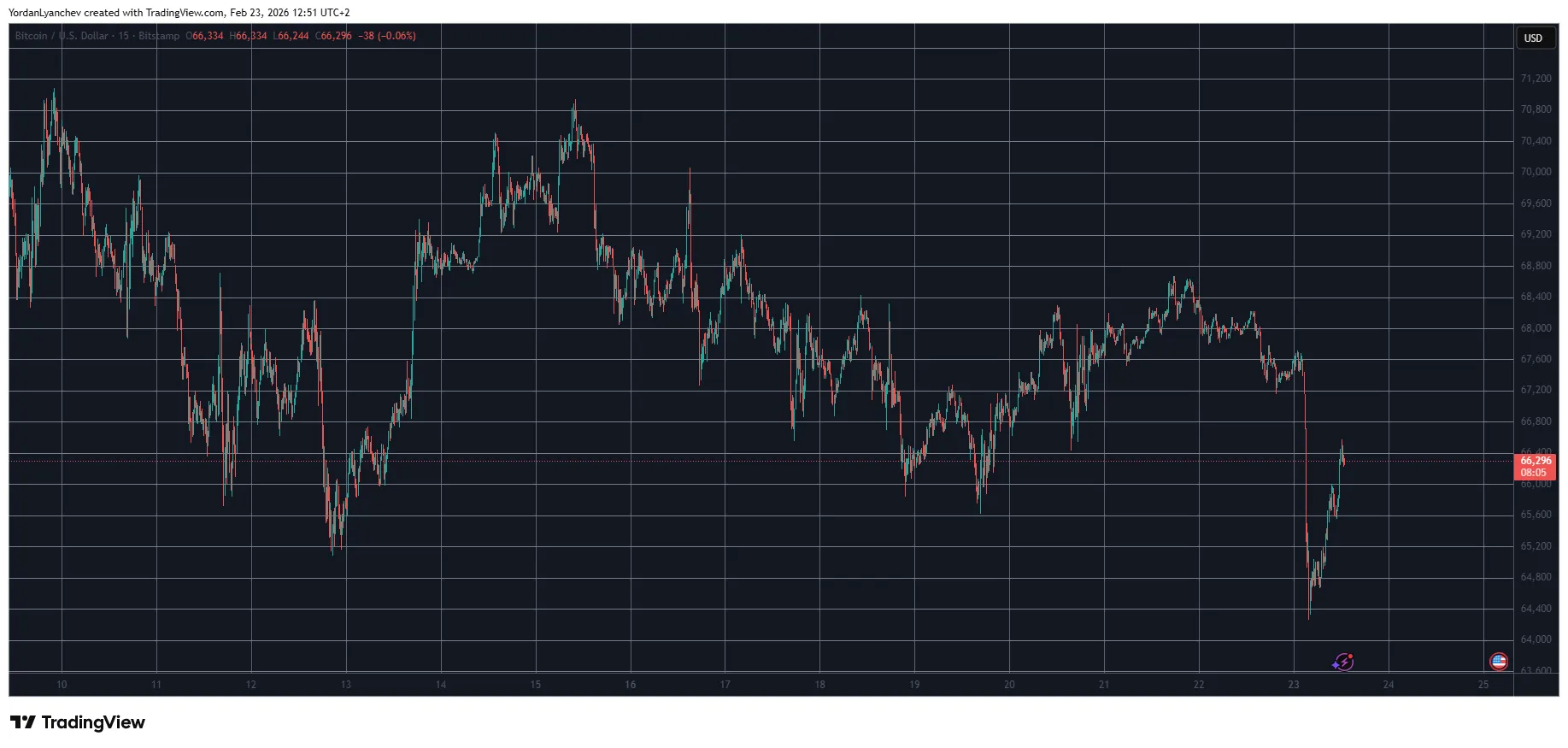
Bitcoin’s weekend stability was shattered upon the opening of traditional futures markets, leading to a sharp decline. The price tumbled to a low of $64,300, marking a 17-day low before buyers stepped in. This swift downturn resulted in substantial liquidations across leveraged trading platforms. Bitcoin has since recovered to above $66,000, but remains down 2.5% on the day, with a market capitalization of $1.325 trillion. Bitcoin’s dominance over the altcoin market currently sits at 56.5%.
Altcoins Experience Pullback
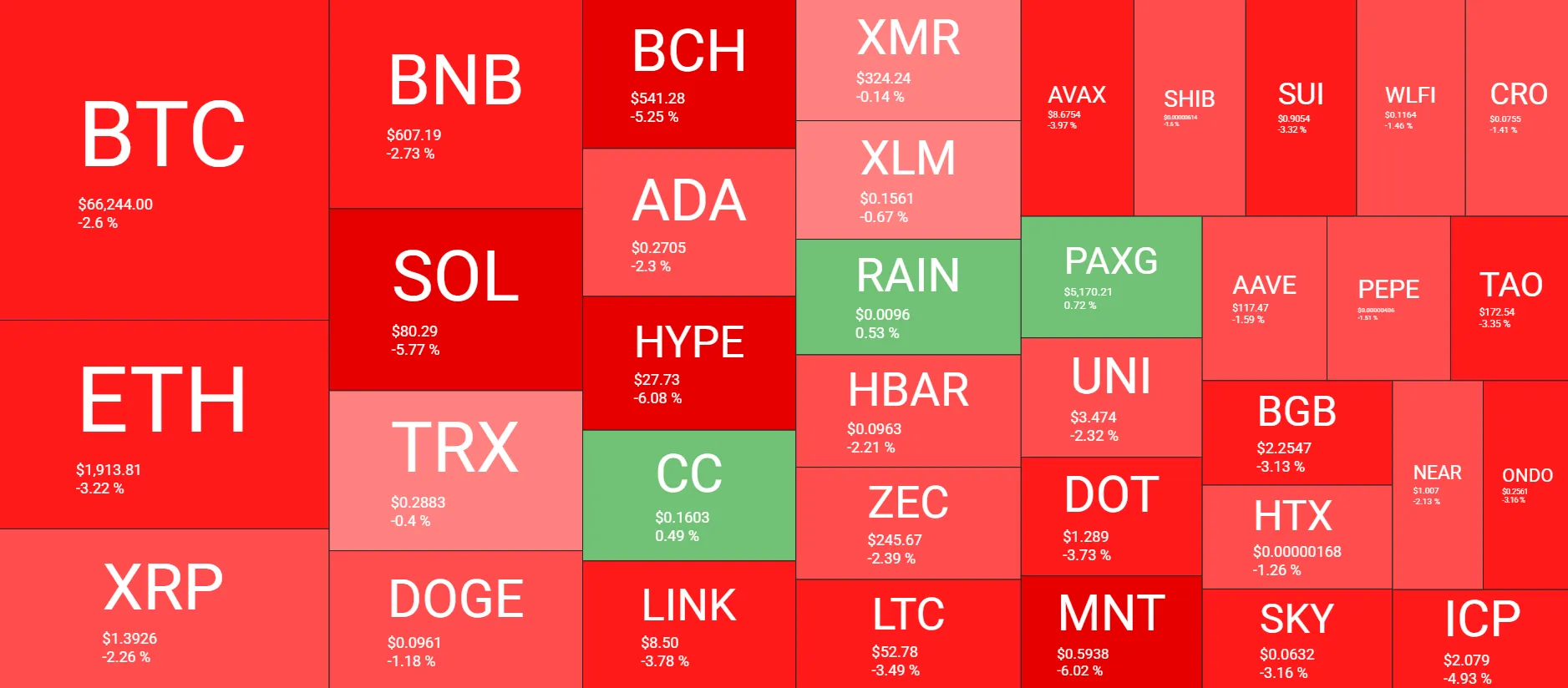
Ethereum mirrored Bitcoin’s decline, falling from nearly $2,000 to $1,850 before partially recovering to just over $1,900. XRP is also down, trading lower by just over 2%. Other major altcoins like BNB, DOGE, ADA, and LINK have also registered similar losses. The downturn was even more pronounced for BCH, SOL, and HYPE, with losses reaching up to 6%.
A few outliers bucked the trend. PIPPIN, for example, surged by over 23% against the broader correction. TON and M also posted slight gains.
Overall, the total crypto market capitalization has decreased by over $60 billion, settling at $2.350 trillion.
Macroeconomic Factors Weigh on Sentiment
The market’s risk-off reaction can be partially attributed to renewed concerns about macroeconomic headwinds. Rising inflation and the potential for further interest rate hikes by the Federal Reserve have created uncertainty among investors. These factors tend to disproportionately impact risk assets like cryptocurrencies.
XRP’s Resilience Amidst Market Volatility
XRP has demonstrated relative stability compared to other altcoins during this period of market volatility. While it has experienced a slight decline, its performance suggests a degree of resilience, likely supported by ongoing developments in its legal proceedings and its established use cases in cross-border payments. This relative stability could make XRP an attractive option for investors seeking to weather the storm.
Looking Ahead
The cryptocurrency market remains sensitive to macroeconomic developments and regulatory news. Investors should closely monitor these factors as they navigate the current environment. While the recent dip has created some uncertainty, it also presents potential buying opportunities for those with a long-term perspective.
Related: XRP Signals: What’s Next After Flash Crash?
Source: Original article
Quick Summary
Bitcoin experienced a sharp decline, falling below $64,500 before recovering. The broader market followed Bitcoin’s lead, with altcoins experiencing significant losses. XRP saw a modest decline, reflecting the overall market sentiment. Bitcoin’s price volatility returned this week as the cryptocurrency dipped below $64,500, a level not seen in over two weeks.
Source
Information sourced from official Ripple publications, institutional research, regulatory documentation and reputable crypto news outlets.
Author
Ripple Van Winkle is a cryptocurrency analyst and founder of XRP Right Now. He has been active in the crypto space for over 8 years and has generated more than 25 million views across YouTube covering XRP daily.
Editorial Note
Opinions are the author's alone and for informational purposes only. This publication does not provide investment advice.

