








Bitcoin’s price has declined to under $63,000, impacting the broader altcoin market. The downturn is influenced by macroeconomic factors and market dynamics affecting digital assets. XRP is down, reflecting the overall market trend, which can affect liquidity and trading strategies.
What to Know:
- Bitcoin’s price has declined to under $63,000, impacting the broader altcoin market.
- The downturn is influenced by macroeconomic factors and market dynamics affecting digital assets.
- XRP is down, reflecting the overall market trend, which can affect liquidity and trading strategies.
Bitcoin experienced a notable downturn, dropping below $63,000, a level not seen since early February. This decline has triggered a ripple effect across the altcoin market, with many cryptocurrencies experiencing significant losses. The market’s reaction reflects a broader sensitivity to macroeconomic factors and internal market dynamics.
Bitcoin’s Recent Price Action
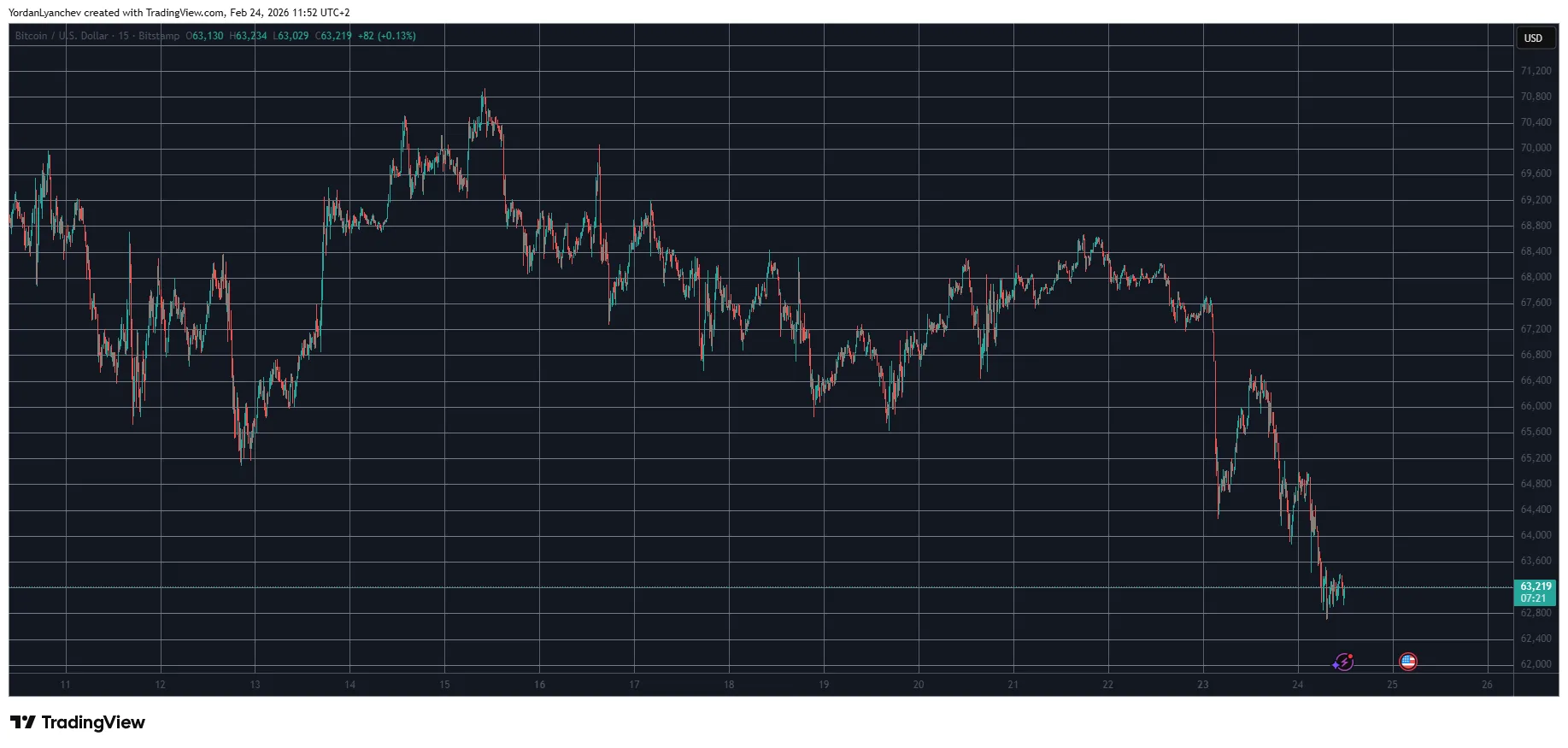
After facing rejection at the $70,000 mark, Bitcoin’s attempts to rebound were unsuccessful. The price remained relatively stable between $67,000 and $68,500 before slipping to $65,600 and then recovering to near $69,000 over the weekend. However, the opening of legacy futures markets on Sunday triggered a sharp decline, with Bitcoin plummeting from $67,700 to $64,400 in a short period. This volatility led to substantial liquidations and a further drop below $63,000, pushing Bitcoin’s market capitalization down to $1.260 trillion.
Altcoins Experience Losses
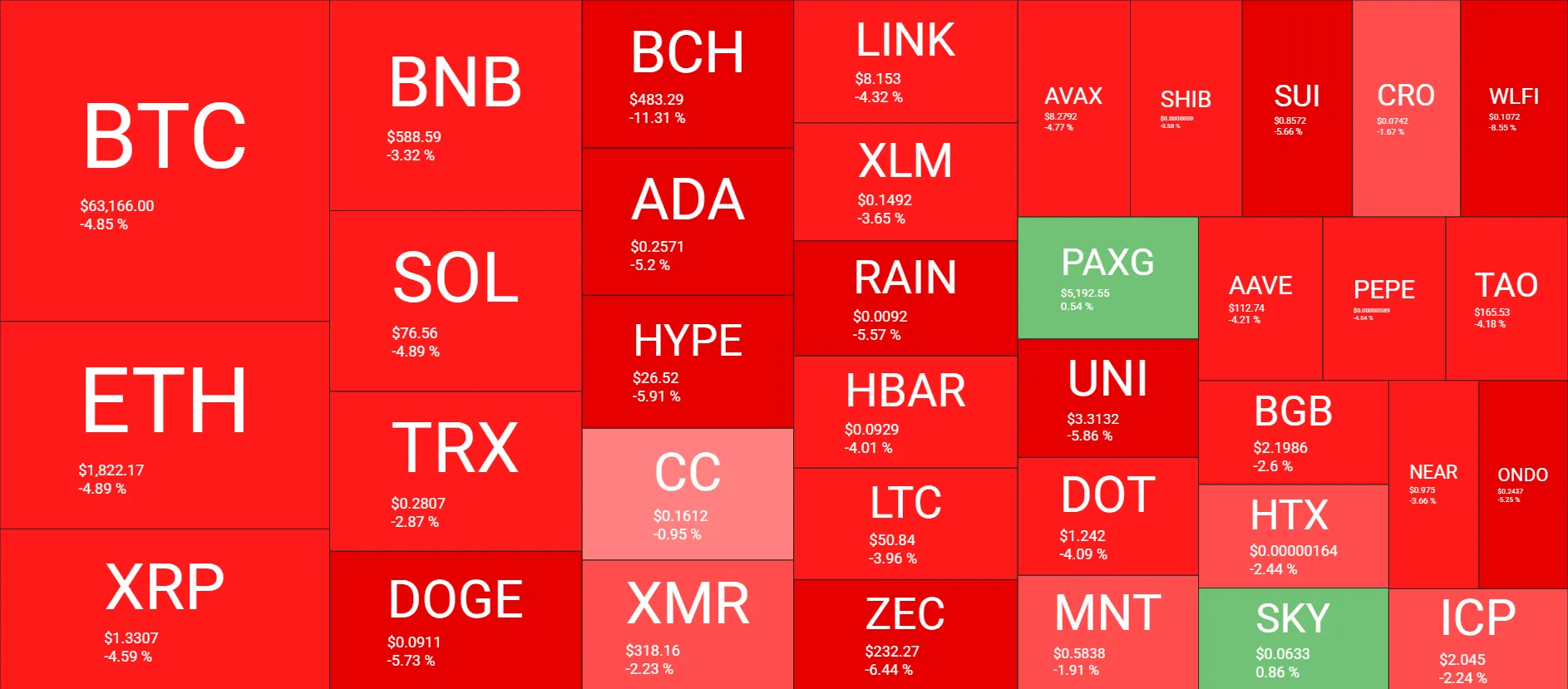
Ethereum has also suffered, declining by 5% to just over $1,800. XRP is down by 4.5%, struggling to stay above $1.30. Other major altcoins like BNB, SOL, and TRX have seen similar losses, while DOGE, ADA, and HYPE have plunged even further. Bitcoin Cash (BCH) experienced the most significant drop among larger cryptocurrencies, shedding over 11% of its value.
Positive Exceptions
Despite the widespread downturn, some altcoins have bucked the trend. PIPPIN, for example, has continued to rally, reaching a new all-time high of $0.80 after a daily jump of 11.5%. These exceptions highlight the selective nature of market movements, where specific projects can thrive even during broader market corrections.
Market Overview
The overall cryptocurrency market capitalization has decreased by more than $150 billion since Sunday, falling to $2.260 trillion. This contraction underscores the impact of Bitcoin’s decline on the broader market, as well as the interconnectedness of various digital assets. Investors are closely monitoring these trends to assess potential opportunities and risks.
Implications for XRP and Liquidity
XRP’s decline reflects the broader market’s risk-off sentiment. For institutional investors, these fluctuations can impact trading strategies and liquidity management. Monitoring XRP’s performance in relation to Bitcoin and other major altcoins is crucial for assessing potential entry and exit points, as well as overall portfolio risk.
The recent market downturn, led by Bitcoin’s decline, underscores the volatility inherent in the cryptocurrency market. While most altcoins have followed suit, some have shown resilience, indicating selective opportunities for investors. Monitoring these trends and understanding the underlying market dynamics are essential for navigating the current landscape.
Related: Crypto: XRP On-Chain Revolution Forecast
Source: Original article
Quick Summary
Bitcoin’s price has declined to under $63,000, impacting the broader altcoin market. The downturn is influenced by macroeconomic factors and market dynamics affecting digital assets. XRP is down, reflecting the overall market trend, which can affect liquidity and trading strategies.
Source
Information sourced from official Ripple publications, institutional research, regulatory documentation and reputable crypto news outlets.
Author
Ripple Van Winkle is a cryptocurrency analyst and founder of XRP Right Now. He has been active in the crypto space for over 8 years and has generated more than 25 million views across YouTube covering XRP daily.
Editorial Note
Opinions are the author's alone and for informational purposes only. This publication does not provide investment advice.

