







Bitcoin mining is facing significant challenges as energy costs become the leading concern in maintaining profitability, making it a seismic shift in the industry’s dynamics. As major mining executives gathered at the SALT conference in Jackson Hole, the message was clear: power is now more valuable than hash rates.
Bitcoin mining is facing significant challenges as energy costs become the leading concern in maintaining profitability, marking a seismic shift in the industry’s dynamics. As major mining executives gathered at the SALT conference in Jackson Hole, the message was clear: power is now more valuable than hash rates.
Energy, Not Hash Rate, Defines Mining Strategy
Historically, bitcoin mining operated under a predictable pattern tied to the four-year halving cycle. Each cycle reduced rewards, prompting miners to either cut costs or expand operations. But those days are over, said Matt Schultz, CEO of Cleanspark. Today, ETF adoption and rising electricity demands have reframed how mining firms approach sustainability.
“We used to focus on metrics like hash rate,” Schultz noted. “Now, the discussion has moved to monetizing megawatts.” Cleanspark has expanded beyond traditional mining to leverage its 800-megawatt energy capacity, with 1.2 gigawatts in development. With 33 locations across the U.S., the company is exploring new avenues to capitalize on power itself.
He emphasized that newer financial products, like bitcoin ETFs, have increased bitcoin’s strategic relevance. According to Schultz, these funds are absorbing significantly more bitcoin than what’s being mined, intensifying market dynamics.
Mounting Economic Pressure on Miners
Patrick Fleury, CFO of Terawulf, reinforced that this sector is undergoing a difficult transformation. “Bitcoin mining is extremely tough right now,” he said. Even with electricity priced at just five cents per kilowatt-hour, mining one bitcoin costs around $60,000. At a price of $115,000 per coin, energy alone consumes half of the revenue.
Fleury added that the constant growth in the global network — driven largely by hardware makers like Bitmain — makes things worse. Bitmain continues deploying new rigs globally, from the U.S. to Pakistan, exploiting ultra-cheap energy sources and increasing mining difficulty. This keeps competition fierce and profit margins slim.
In an impressive pivot, Terawulf recently signed a $6.7 billion partnership with Google to repurpose hundreds of megawatts of infrastructure for data centers. This provides a more sustainable revenue model, supported by Google’s $3.2 billion lease obligation, lowering Terawulf’s capital costs dramatically.
IREN’s Profitable Mining Model
Despite an industry-wide crunch, IREN’s Chief Commercial Officer Kent Draper shared a more optimistic outlook. He attributed his firm’s success to its long-standing focus on ultra-low-cost power. “Being a low-cost producer is what enables us to stay competitive,” he said.
IREN operates at 50 exahash, generating nearly $1 billion annually with gross margins around 75%. After factoring in operating costs and SG&A, the company still posts 65% EBITDA margins.
Nevertheless, IREN is taking a pause on mining expansion to explore AI opportunities. Draper discussed the company’s moves into AI cloud services and co-location, noting that owning GPUs requires triple the investment compared to traditional mining, though cloud profitability can be realized in as little as two years.
Marathon Digital Takes a Diversified Path
Salman Khan, CFO at Marathon Digital, likened the mining volatility to the oil sector’s cyclical nature. He emphasized financial agility and balance sheet strength as crucial survival tools. Marathon holds bitcoin as a hedge and recently acquired a majority stake in Exaion, focusing on sovereign edge compute — where local data control and recurring revenues from software and platform services are the focus.
“We see a lot of value in computing closer to the user,” said Khan, who believes the transition from mining to compute diversification is already paying off.
Power Flexibility Becomes a Strategic Asset
Across all discussions, one factor remained front and center: power flexibility. Cleanspark’s Schultz highlighted the advantages of operating as a flexible energy user. “We curtail our usage for 120 hours a year, reducing about a third of total energy costs,” he said. This strategy has helped Cleanspark secure valuable grid partnerships in locations such as Atlanta, where they manage 100 megawatts near the airport.

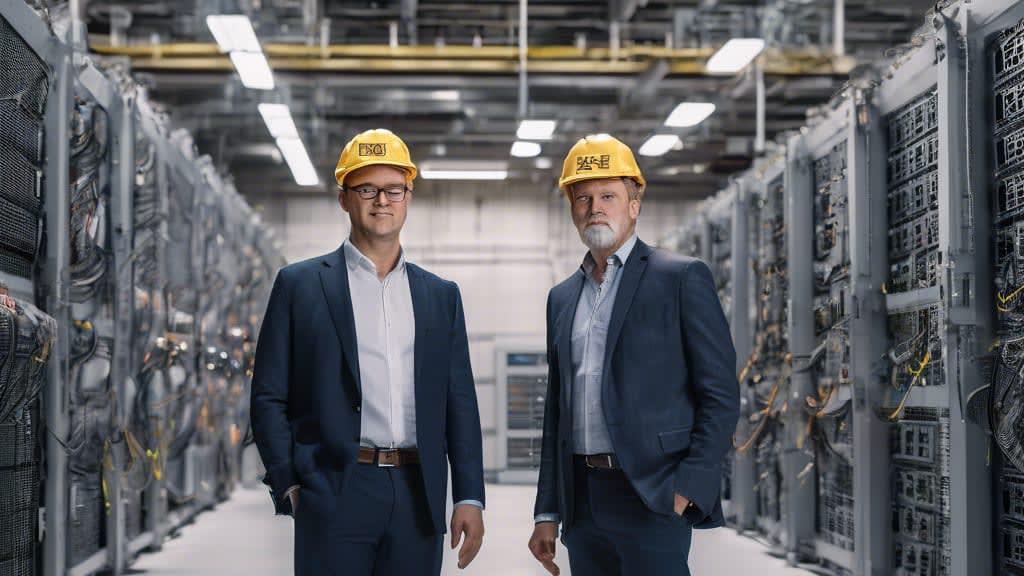
Crypto miners are seeking cheaper and more flexible power sources to survive the shifting market dynamics.
Bitcoin Still Central — For Now
While AI and data center strategies are gaining attention, bitcoin remains core to these firms’ operations. The panel firmly contended that scale, efficiency, and resilience make mining companies attractive amid volatility.
Fleury noted that Terawulf’s contracted power portfolio is capable of delivering strong cash flows. Khan pointed out a disparity between Marathon’s bitcoin reserves and its market valuation. Draper emphasized that IREN’s cost control and operational finesse set them apart from competitors.
Finally, Schultz suggested a broader vision for bitcoin’s role — not just as an investment asset, but as a system capable of aiding grid balancing through flexible power partnerships.
Related: Cardano Bull Setup Points to December Rally
For more insights on rising mining costs, check out Bitcoin Mining Costs Soar as Hashrate Hits Records: TheMinerMag.
Quick Summary
Bitcoin mining is facing significant challenges as energy costs become the leading concern in maintaining profitability, marking a seismic shift in the industry’s dynamics. As major mining executives gathered at the SALT conference in Jackson Hole, the message was clear: power is now more valuable than hash rates.
Source
Information sourced from official Ripple publications, institutional research, regulatory documentation and reputable crypto news outlets.
Author
Ripple Van Winkle is a cryptocurrency analyst and founder of XRP Right Now. He has been active in the crypto space for over 8 years and has generated more than 25 million views across YouTube covering XRP daily.
Editorial Note
Opinions are the author's alone and for informational purposes only. This publication does not provide investment advice.

