








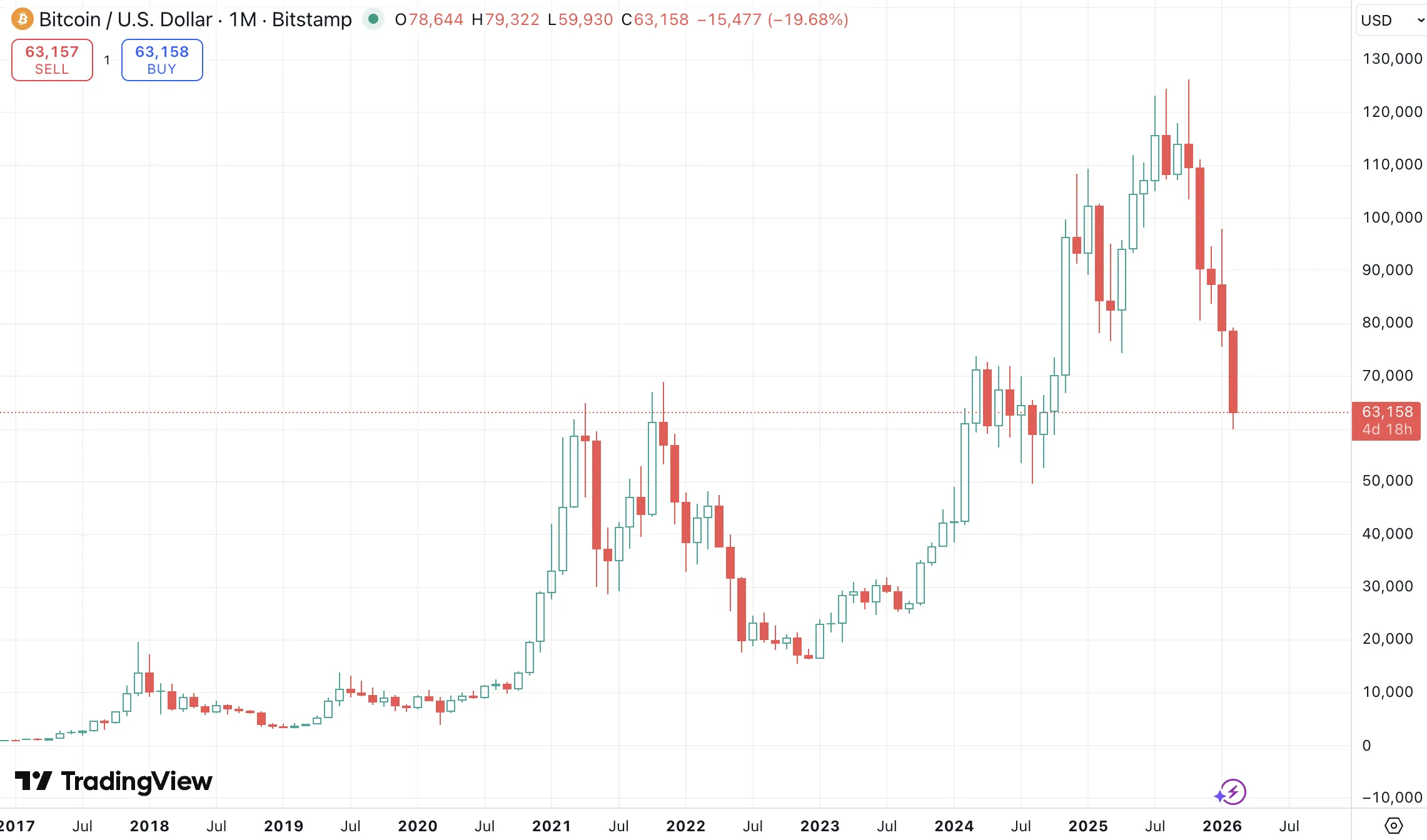
Bitcoin’s recent dip below $63,000 indicates heightened volatility and tests a key support level. Derivatives market dynamics, particularly leveraged positions, are heavily influencing Bitcoin’s price action.
What to Know:
- Bitcoin’s recent dip below $63,000 signals heightened volatility and tests a key support level.
- Derivatives market dynamics, particularly leveraged positions, are heavily influencing Bitcoin’s price action.
- Despite price corrections, institutional adoption of Bitcoin continues to grow, creating a divergence that warrants careful observation.
Bitcoin’s recent break below the $63,000 mark has triggered concern among investors, highlighting the volatile nature of the crypto market. This price movement arrives amid growing institutional interest and adoption, creating a perplexing divergence that demands deeper analysis. Understanding the forces at play is crucial for institutional investors navigating this evolving landscape, especially considering the influence of derivatives and the potential for further market corrections.
Adoption Versus Price Action
While Bitcoin’s price has corrected sharply, it’s important to acknowledge the increasing institutional participation. Firms like Harvard, Middle Eastern sovereign wealth funds, and even Vanguard are making inroads into Bitcoin, either through direct investment or by offering access to Bitcoin ETFs. This level of institutional involvement was largely unthinkable just a few years ago, suggesting a fundamental shift in the perception and acceptance of Bitcoin as an asset class. However, these inflows have not been enough to offset selling pressure.
The Derivatives Market Influence
The disconnect between adoption and price can largely be attributed to the derivatives market. Leveraged trading amplifies price swings, and forced liquidations can trigger rapid and significant declines. The derivatives market adds complexity and introduces risks that are not always aligned with the underlying fundamentals of adoption and long-term value. Monitoring open interest, funding rates, and liquidation levels on major exchanges can provide insights into potential volatility and directional biases.
Critical Support Levels
The $60,000 level has emerged as a critical threshold to watch. Venture capitalist Vinny Lingham suggests that a break below this level could trigger a more significant market capitulation. For instance, MicroStrategy (MSTR), a major corporate holder of Bitcoin, could see its stock price plummet if Bitcoin breaches this key support. This highlights the interconnectedness of the crypto market with traditional finance and the potential for cascading effects.
Historical Parallels and Future Outlook
Bitcoin’s history is marked by significant price corrections followed by periods of recovery and growth. Each cycle has established higher “floors,” indicating increasing resilience and maturity in the market. While short-term volatility is likely to persist, the long-term trajectory remains positive, driven by increasing adoption and the potential for further integration into the global financial system. Savvy investors will look to accumulate positions during periods of weakness, recognizing the long-term value proposition of Bitcoin.
Regulatory Developments and Market Structure
The regulatory landscape continues to evolve, and clarity in this area will be crucial for sustained institutional adoption. Clear guidelines on custody, taxation, and trading practices will help to reduce uncertainty and attract more conservative investors. Furthermore, improvements in market structure, such as enhanced liquidity and more efficient settlement systems, will contribute to a more stable and mature market environment. The launch and performance of Bitcoin ETFs will also play a significant role in shaping market sentiment and attracting new capital.
ETF Dynamics and Market Liquidity
The mechanics of Bitcoin ETFs can significantly impact market liquidity. Authorized participants (APs) play a crucial role in maintaining price equilibrium between the ETF and the underlying Bitcoin market. However, imbalances in supply and demand can lead to premiums or discounts in the ETF price, potentially exacerbating volatility. Understanding these dynamics is essential for institutional investors using ETFs as a primary means of exposure to Bitcoin.
In conclusion, Bitcoin’s recent price correction underscores the inherent volatility of the crypto market, exacerbated by derivatives trading. However, the continued growth in institutional adoption suggests a positive long-term outlook. Monitoring key support levels, regulatory developments, and ETF dynamics will be crucial for navigating this evolving landscape and capitalizing on future opportunities.
Related: XRP Losses Show Crypto Risk Aversion
Source: Original article
Quick Summary
Bitcoin’s recent dip below $63,000 signals heightened volatility and tests a key support level. Derivatives market dynamics, particularly leveraged positions, are heavily influencing Bitcoin’s price action. Despite price corrections, institutional adoption of Bitcoin continues to grow, creating a divergence that warrants careful observation.
Source
Information sourced from official Ripple publications, institutional research, regulatory documentation and reputable crypto news outlets.
Author
Ripple Van Winkle is a cryptocurrency analyst and founder of XRP Right Now. He has been active in the crypto space for over 8 years and has generated more than 25 million views across YouTube covering XRP daily.
Editorial Note
Opinions are the author's alone and for informational purposes only. This publication does not provide investment advice.

