






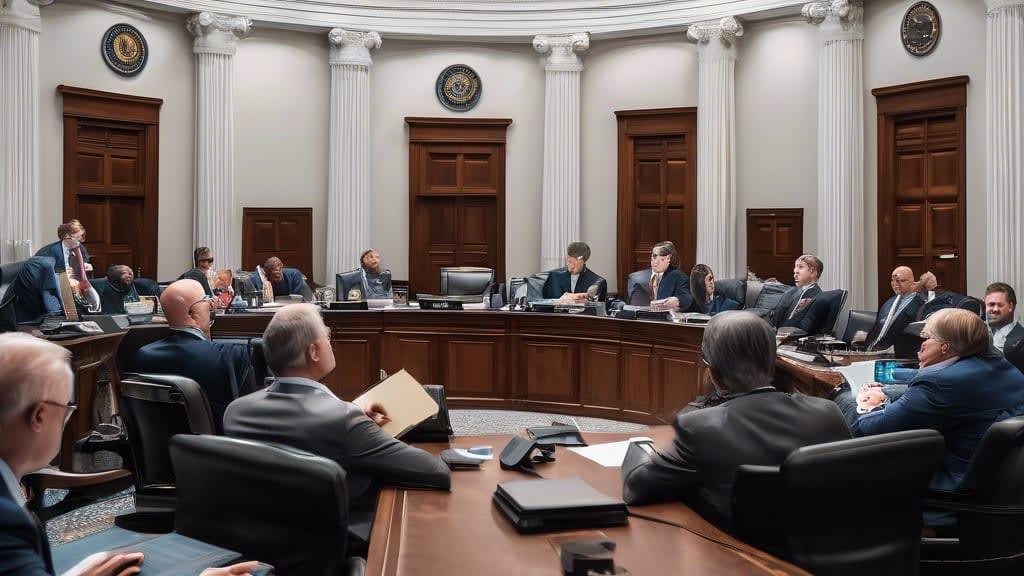

Ripple’s role in shaping crypto regulation may soon see bipartisan backing, as U.S. Senator Tim Scott suggests growing Democratic support for a key digital asset bill.
Ripple’s role in shaping crypto regulation may soon see bipartisan backing, as U.S. Senator Tim Scott suggests growing Democratic support for a key digital asset bill.
Growing Bipartisan Momentum in the Senate
Speaking at the SALT conference in Jackson Hole, Wyoming, Senator Tim Scott, chair of the Senate Banking Committee, revealed optimism about Democratic support for upcoming market structure legislation impacting digital assets like Ripple’s XRP. Scott predicted that between 12 and 18 Democratic Senators may be inclined to vote for the bill, signaling bipartisan momentum.
“I believe that we’ll have between 12 and 18 Democrats at least open to voting for market structure,” Scott noted during his panel appearance.
He acknowledged significant political resistance to the bill, citing Senator Elizabeth Warren as a powerful voice urging opposition within the Democratic ranks. “The forces against it, let me just say clearly, like Sen. Elizabeth Warren, standing in the way of Democrats wanting to participate, it is a real force to overcome,” he added.
Why the Market Structure Bill Matters for XRP
While Congress and President Donald Trump previously enacted the GENIUS Act to regulate stablecoins, stakeholder attention now shifts to comprehensive market structure rules. This legislation will play a pivotal role in determining how regulators such as the Securities and Exchange Commission (SEC) and the Commodity Futures Trading Commission (CFTC) oversee sectors such as the XRP spot market.
The clarity offered by this bill is particularly important to Ripple and XRP investors, as it aims to establish defined jurisdictions and compliance standards between the SEC and CFTC, reducing regulatory uncertainty that has slowed crypto adoption and development.
Timeline and Legislative Process
According to Scott, lawmakers expect to finalize the bill before the end of September. He previously shared this timeline in a conversation with former White House crypto adviser Bo Hines. If enacted, it would mark one of the most significant developments for the U.S. crypto market structure.
In July, the Senate Banking Committee initiated its version of the bill, outlining the SEC’s specific responsibilities over digital assets. This followed the House’s advancement of its own Clarity Act just a week earlier.
However, for the bill to move forward in the Senate, at least 60 votes are required, making Democratic involvement critical. Additionally, both chambers—House and Senate—must either pass the same version of the bill or unify any differences between their drafts. As of now, the Senate Agriculture Committee, which also plays a role in regulating commodities, has yet to release its version of the discussion draft.
Ripple’s Position in the Regulatory Conversation
The outcome of this legislation could significantly impact Ripple’s operations, legal clarity over XRP, and broader digital asset innovation in the U.S.
Participants in the crypto sphere, including Ripple, continue to advocate for streamlined regulations. Strong bipartisan support for the market structure bill could be a step towards unlocking more consistent federal oversight, legitimizing digital asset infrastructure, and encouraging technological innovation.
Lawmakers, stakeholders, and crypto enthusiasts are preparing for the anticipated debate and vote later this year, with attention focused on how the final law might support fair competition, bolster investor confidence, and shape Ripple’s future compliance requirements.
Related: XRP, Bitcoin Could React to Inflation Data
Join the crypto policy conversation Sept. 10 in D.C. — Register now for CoinDesk: Policy & Regulation.
Quick Summary
Ripple’s role in shaping crypto regulation may soon see bipartisan backing, as U.S. Senator Tim Scott suggests growing Democratic support for a key digital asset bill.
Source
Information sourced from official Ripple publications, institutional research, regulatory documentation and reputable crypto news outlets.
Author
Ripple Van Winkle is a cryptocurrency analyst and founder of XRP Right Now. He has been active in the crypto space for over 8 years and has generated more than 25 million views across YouTube covering XRP daily.
Editorial Note
Opinions are the author's alone and for informational purposes only. This publication does not provide investment advice.

