







Ripple’s CTO, David Schwartz, clarified that the 2017 XRP escrow limited, rather than expanded, Ripple’s ability to sell XRP. The discussion arose from a debate about wealth, taxes, and fairness, highlighting the intersection of crypto and broader economic issues.
What to Know:
- Ripple’s CTO, David Schwartz, clarified that the 2017 XRP escrow limited, rather than expanded, Ripple’s ability to sell XRP.
- The discussion arose from a debate about wealth, taxes, and fairness, highlighting the intersection of crypto and broader economic issues.
- This clarification addresses a common concern among XRP investors about the impact of Ripple’s XRP sales on market value and institutional perceptions.
A recent public exchange involving Ripple’s CTO, David Schwartz, has shed light on the mechanics and purpose of the XRP escrow established in 2017. The conversation, sparked by a discussion on wealth and tax fairness, evolved into a detailed explanation of how the escrow system actually constrained Ripple’s XRP sales. This clarification is particularly relevant for institutional investors who closely monitor the supply dynamics and corporate governance of digital assets like XRP.
Ripple CTO Enters Tax Debate
The discussion began with a political commentator criticizing the tax obligations of high-net-worth individuals, using Elon Musk as an example. Schwartz responded, leading to an XRP investor questioning Schwartz’s credibility in the debate. The investor alleged that the XRP escrow was designed to allow Ripple to sell up to 1 billion XRP monthly, benefiting the company and its employees. This perspective reflects a common concern within the XRP community regarding the impact of Ripple’s sales on the digital asset’s price.
The Escrow’s True Function
Schwartz countered this assertion by stating that before the escrow was in place, Ripple had no formal restrictions on XRP sales. Implementing the escrow introduced limitations by locking up a significant portion of Ripple’s XRP holdings and releasing it on a predetermined schedule.
Before the escrow, Ripple could have sold as much XRP as it wanted every month. And I opposed the decision to implement the escrow precisely because I didn’t see enough upside to justify giving up that flexibility.
— David ‘JoelKatz’ Schwartz (@JoelKatz) December 25, 2023
This distinction is crucial for institutional investors, as it highlights the importance of understanding the nuances of tokenomics and corporate governance in the crypto space. The escrow, rather than being a tool for unchecked sales, was a mechanism that provided more transparency and predictability to the market.
Market Perception vs. Reality
The investor then suggested that XRP’s price would be significantly higher if Ripple had not consistently sold XRP since 2017. Schwartz acknowledged the plausibility of this argument but pointed out that market prices typically reflect anticipated events. Given that Ripple’s XRP releases were widely known, this factor should already be priced into the asset. This perspective aligns with efficient market theory, which posits that asset prices reflect all available information.
Comparative Asset Analysis
To bolster his argument, Schwartz compared XRP’s price action to that of Stellar’s XLM. Both assets have exhibited similar price movements over time, despite Stellar burning half of its total supply in 2019. The supply reduction had no discernible impact on XLM’s price.
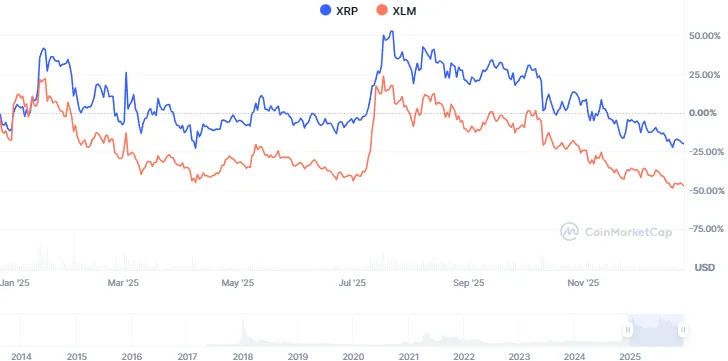
This comparison illustrates the complexities of supply and demand dynamics in the cryptocurrency market. While scarcity is often touted as a key driver of value, other factors such as adoption, utility, and overall market sentiment can play a more significant role.
Implications for Institutional Investors
Schwartz’s clarification provides valuable context for institutional investors evaluating XRP. Understanding the constraints imposed by the escrow mechanism and the potential impact of Ripple’s XRP sales is essential for making informed investment decisions. Moreover, the comparison with Stellar’s XLM underscores the importance of considering broader market dynamics rather than solely focusing on token supply.
In conclusion, the Ripple CTO’s explanation offers a nuanced perspective on the XRP escrow and its effects on the market. While concerns about Ripple’s XRP sales persist, the evidence suggests that the escrow imposed limitations on the company’s flexibility, and that market prices already reflect the anticipated releases. Institutional investors should carefully consider these factors when assessing XRP’s potential within a diversified digital asset portfolio.
Related: XRP Signals Bull Run, Bitcoin Faces Problem
Source: Original article
Quick Summary
Ripple’s CTO, David Schwartz, clarified that the 2017 XRP escrow limited, rather than expanded, Ripple’s ability to sell XRP. The discussion arose from a debate about wealth, taxes, and fairness, highlighting the intersection of crypto and broader economic issues.
Source
Information sourced from official Ripple publications, institutional research, regulatory documentation and reputable crypto news outlets.
Author
Ripple Van Winkle is a cryptocurrency analyst and founder of XRP Right Now. He has been active in the crypto space for over 8 years and has generated more than 25 million views across YouTube covering XRP daily.
Editorial Note
Opinions are the author's alone and for informational purposes only. This publication does not provide investment advice.

