








XRP is currently experiencing a critical moment as a major on-chain indicator reveals a sharp 50% decline, putting the recent rally under pressure. This drop in user activity raises concerns about the sustainability of the upward momentum that has seen XRP surpass $2.95 over the last few weeks.
XRP is currently experiencing a critical moment as a major on-chain indicator reveals a sharp 50% decline, putting the recent rally under pressure. This drop in user activity raises concerns about the sustainability of the upward momentum that has seen XRP surpass $2.95 over the last few weeks.
The discrepancy between XRP’s soaring market value and the steep fall in active address usage paints a worrying picture. Active addresses, often viewed as a reflection of organic demand and real-time network utility, have declined significantly since a peak observed in June. While the token has recorded nearly 50% growth in value, the number of users actively engaging with the network is failing to keep pace.
This misalignment is not new to XRP. Historically, whenever there has been a disconnect between price appreciation and on-chain activity, the cryptocurrency has faced sharp reversals. Such patterns highlight the importance of consistent engagement on the network to sustain price growth. The ongoing divergence could hint at a potential correction ahead if the usage metrics do not rebound in the near term.
From a technical standpoint, the current rally showcases a powerful breakout. XRP has surged past major moving averages, with daily candlesticks pulling above the 200-day Moving Average around the $2.14 mark. This move has been accompanied by strong trading volume and an extremely high Relative Strength Index (RSI), currently registering over 84. These indicators suggest that XRP is entrenched in overbought territory, increasing the probability of near-term pullbacks.
Analysts caution that when price movements reach such exuberant highs without strengthening on-chain fundamentals, the likelihood of a ‘mean reversion’ scenario grows. This means that XRP could experience a swift pullback to more historically stable levels unless new traders and long-term holders step in to support further momentum. A possible liquidity vacuum could be created if the market lacks sufficient new participants, making it vulnerable to heavy selling pressure and potential cascade liquidations.
XRP’s community and market behavior are often influenced by rapid sentiment shifts and an unpredictable regulatory environment. These variables may amplify the reaction if a correction does indeed occur. On the flip side, the recent dip in activity might just be a temporary slowdown — perhaps the result of users reallocating funds across exchanges or taking profits from the rally.
What remains clear, however, is that the health of XRP’s rally depends heavily on a recovery in its key network utility indicators. Without an uptick in active address counts or a broader signal of network growth, the current upward trajectory could become harder to maintain. XRP will need renewed engagement and consistent user support to avoid slipping back into uncertain territory.
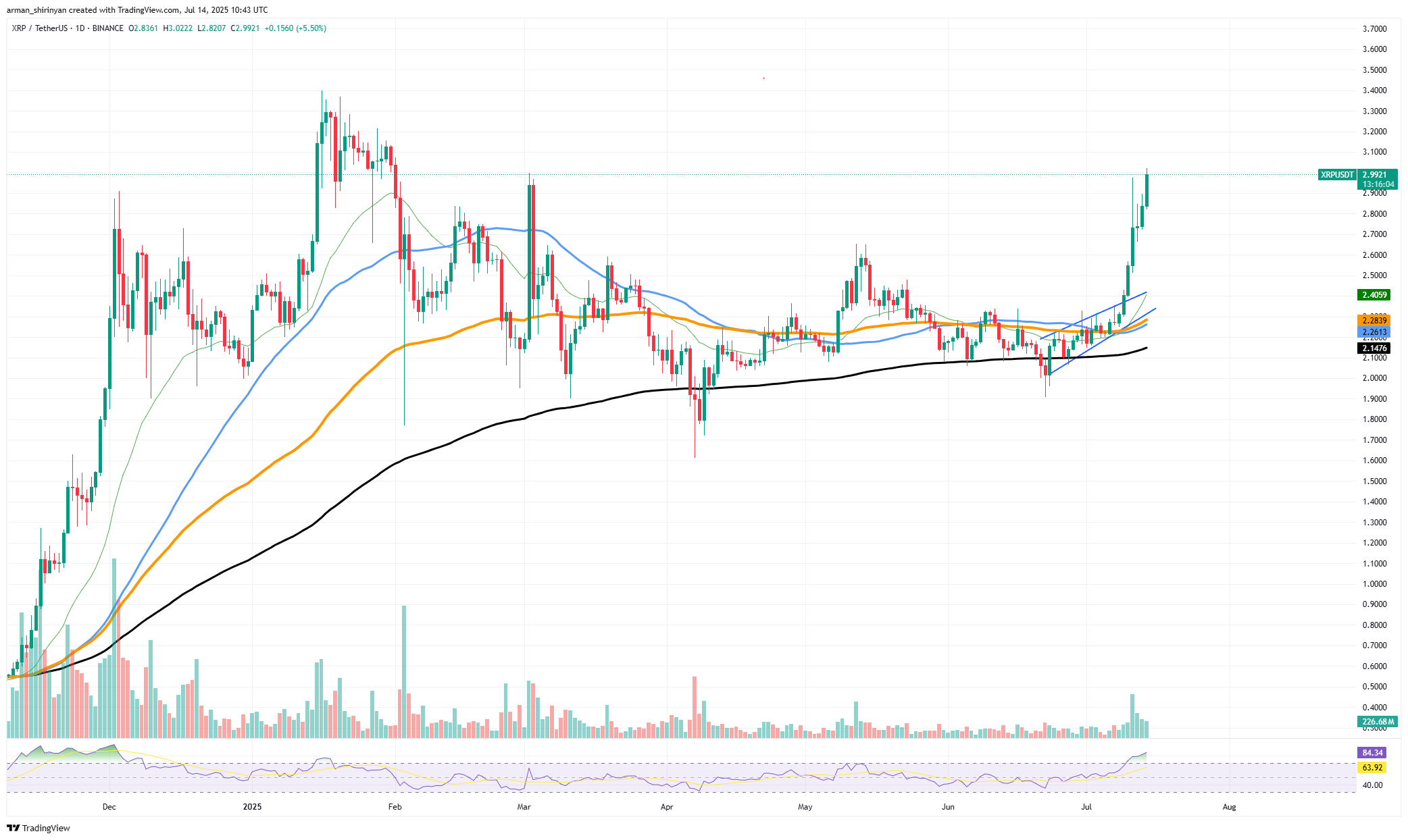
As investors watch the charts closely, XRP stands at a crossroad — with the path ahead largely determined by whether it can regain on-chain momentum to match its price growth.
Related: XRP Price: $12M Max Pain for Bears
Quick Summary
XRP is currently experiencing a critical moment as a major on-chain indicator reveals a sharp 50% decline, putting the recent rally under pressure. This drop in user activity raises concerns about the sustainability of the upward momentum that has seen XRP surpass $2.95 over the last few weeks.
Source
Information sourced from official Ripple publications, institutional research, regulatory documentation and reputable crypto news outlets.
Author
Ripple Van Winkle is a cryptocurrency analyst and founder of XRP Right Now. He has been active in the crypto space for over 8 years and has generated more than 25 million views across YouTube covering XRP daily.
Editorial Note
Opinions are the author's alone and for informational purposes only. This publication does not provide investment advice.

