







XRP’s historical volatility has dropped to levels last seen in June 2024, potentially signaling a bottom in its current downtrend. This volatility compression could lead to a significant price expansion, reminiscent of past rallies.
What to Know:
- XRP’s historical volatility has dropped to levels last seen in June 2024, potentially signaling a bottom in its current downtrend.
- This volatility compression could lead to a significant price expansion, reminiscent of past rallies.
- For institutional investors, this presents a speculative opportunity, though regulatory factors and overall market sentiment remain crucial considerations.
XRP has experienced significant turbulence, mirroring the broader crypto market’s volatility since late 2025. Despite a substantial decline from its all-time high, recent market data suggests a potential shift in momentum. The cryptocurrency’s historical volatility has plummeted, reaching levels that historically preceded notable upswings. This analysis delves into the implications of this volatility compression and its potential impact on XRP’s future performance.
Historical Volatility and Market Bottoms
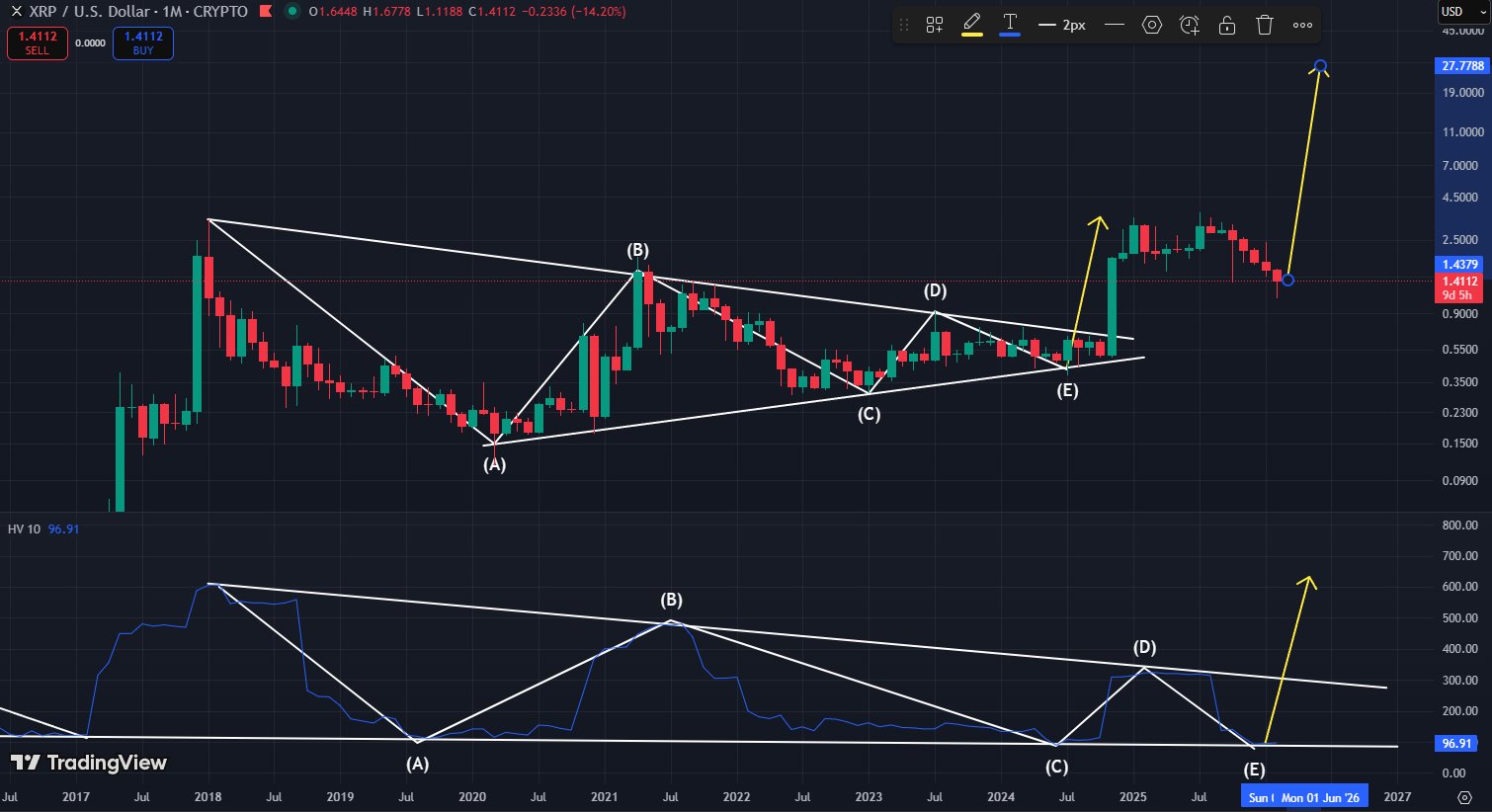
Market commentator Austin highlighted that XRP’s historical volatility indicator has reached an extreme low of 96. The last instance of such low volatility was in June 2024, which closely preceded a market bottom. It’s important to note that historical volatility reflects the degree of price fluctuations over a specific period, offering insights into market stability or turbulence. The current low volatility, coupled with higher price lows compared to June 2024, suggests a possible build-up of market pressure.
Compression Leading to Expansion
Austin’s analysis suggests that the current compression in XRP’s volatility could lead to a significant price expansion. This view is based on the idea that prolonged periods of low volatility are often followed by sharp price movements as market participants react to new information or changing sentiment. For institutional investors, understanding these patterns is crucial for timing entry and exit points, though it’s essential to acknowledge that historical patterns are not definitive predictors of future performance.
ABCDE Wave Structure
Further technical analysis indicates that XRP’s historical volatility is following an ABCDE wave structure within a contracting triangle. The recent drop to 96 marks the conclusion of Wave E, suggesting an imminent upward breakout. Such patterns are closely watched by technical analysts, as they often signal the end of a consolidation period and the beginning of a new trend. However, the effectiveness of these patterns can vary, and they should be used in conjunction with other indicators and fundamental analysis.
Potential for a 2017-Like Rally
Austin has projected that the anticipated expansion could lead to a rally similar to the one observed in 2017. During that period, XRP experienced an extraordinary surge, climbing from $0.0050 in February 2017 to a peak of $3.31 by January 2018. While replicating such gains would be an ambitious expectation, the comparison highlights the potential for substantial returns if the market conditions align favorably. It is important to remember that the cryptocurrency market has matured significantly since 2017, with increased regulatory scrutiny and institutional participation.
Institutional Considerations
For institutional investors, the potential for an XRP rally presents both opportunities and challenges. The low volatility environment may offer an attractive entry point, but it also requires careful risk management. Factors such as regulatory developments, Ripple’s ongoing legal battles, and overall market sentiment can significantly impact XRP’s price trajectory. Additionally, the liquidity and settlement systems for XRP are not as mature as those for Bitcoin or Ethereum, which could pose challenges for larger investment firms.
While historical data suggests a potential upswing for XRP, investors should remain cautious and consider a range of factors before making investment decisions. The cryptocurrency market is inherently volatile, and past performance is not indicative of future results. A thorough understanding of market dynamics, regulatory risks, and Ripple’s specific challenges is essential for navigating this evolving landscape.
Related: XRP Signals Negative Funding: Derivatives Data
Source: Original article
Quick Summary
XRP’s historical volatility has dropped to levels last seen in June 2024, potentially signaling a bottom in its current downtrend. This volatility compression could lead to a significant price expansion, reminiscent of past rallies.
Source
Information sourced from official Ripple publications, institutional research, regulatory documentation and reputable crypto news outlets.
Author
Ripple Van Winkle is a cryptocurrency analyst and founder of XRP Right Now. He has been active in the crypto space for over 8 years and has generated more than 25 million views across YouTube covering XRP daily.
Editorial Note
Opinions are the author's alone and for informational purposes only. This publication does not provide investment advice.

