








XRP tokenomics are back in the spotlight as a recent memecoin launch tied to Ye (formerly Kanye West) mirrors concerns that have long dogged Ripple and other projects—specifically, the influence of insider allocations and centralized liquidity structures on retail investors.
XRP tokenomics are back in the spotlight as a recent memecoin launch tied to Ye (formerly Kanye West) mirrors concerns that have long dogged Ripple and other projects—specifically, the influence of insider allocations and centralized liquidity structures on retail investors.
The Sudden Rise and Fallout of YZY
The latest controversy involves YZY, a memecoin built on the Solana blockchain and loosely attributed to Ye. The project skyrocketed upon launch, reaching $3.16 from a minuscule base—reportedly a 6,800% increase. At its peak, some analytics claimed it flirted with a $3 billion valuation.
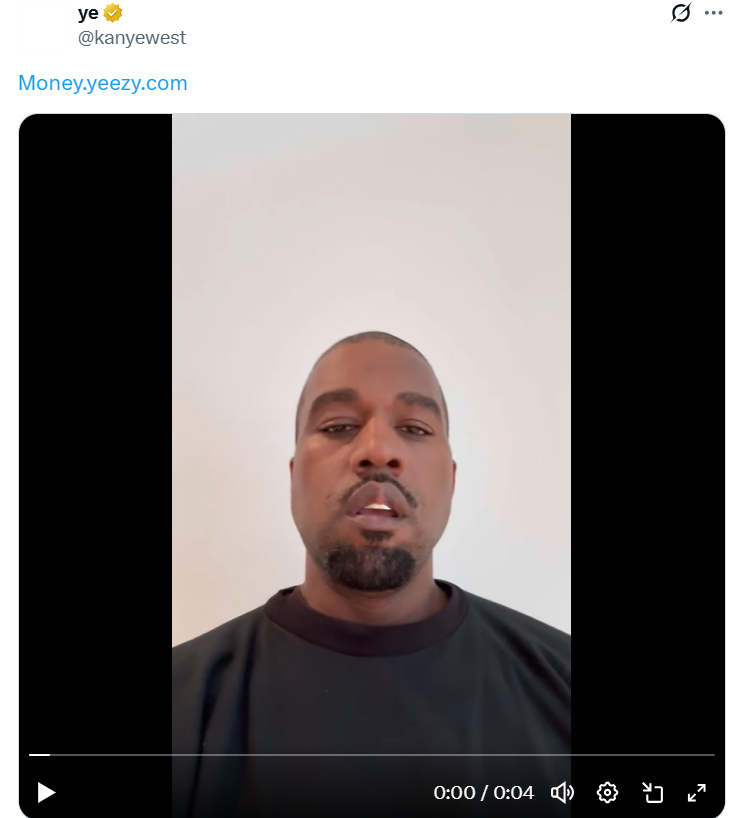
Public interest was stoked when Ye’s official X account shared a post discussing the token during early Asian market hours. One later post included a video that appeared to feature Ye endorsing the token, but questions remain about its authenticity, with speculation that it could be AI-generated.
YZY token witnessed an explosive launch before facing severe volatility. (CoinDesk Data)
Dissecting the Token Structure and Insider Access
According to earlier disclosures, the token’s supply was heavily tilted toward insiders. CoinDesk previously reported that 70% of YZY tokens were reserved for Ye himself, with just 10% allocated for liquidity and 20% released in a public sale. Those terms closely resemble the distribution model seen with Donald Trump’s TRUMP token.
Insiders reportedly negotiated Ye down from an original demand of 80% of the tokens. Despite Ye’s earlier criticisms that “coins prey on the fans with hype,” he eventually sanctioned the project. Insiders stated their intention was to replicate the success of the TRUMP token. However, the launch bore more resemblance to Argentina’s failed LIBRA coin, which suffered from insider profit-taking and pump-and-dump schemes.
Token Launch Tactics: Fair on Paper, Risky in Practice
YZY’s launch featured a strategy meant to counter sniper bots: deploying 25 separate contract addresses, only one of which was randomly designated as the official token. While promoted as a fairer launch method, on-chain data suggests some users were able to exploit insider knowledge.
The analytics platform Lookonchain identified a wallet—address 6MNWV8—that attempted to purchase the token even before going live. Once trading commenced, the wallet invested 450,611 USDC to acquire 1.29 million YZY tokens at an average price of $0.35. It later liquidated 1.04 million of those for 1.39 million USDC, netting a profit of over $1.5 million while retaining a holdings value nearing $600,000.
Another whale wallet committed 12,170 SOL, or approximately $2.28 million, acquiring 2.67 million YZY. The current market value of this position is around $8.29 million, representing an unrealized profit of about $6 million.
Liquidity Pool Concerns and Market Implications
One critical structural detail was YZY’s liquidity configuration: the pool was seeded exclusively with YZY tokens, with no USDC pairing. This single-sided liquidity approach opened avenues for developers or major holders to manipulate liquidity — effectively allowing them to exit positions under favorable terms, akin to what occurred with LIBRA.
Lookonchain highlighted this vulnerability: “Only $YZY was added to the liquidity pool with no $USDC. Dev may sell $YZY by adding/removing liquidity.”
Such tactics, where insiders buy low and sell high on manipulated liquidity, echo long-standing concerns floated about projects like XRP and Ripple, where early holders control large supplies and can influence market performance.
Retail Fallout and Speculative Risks
The speculative mania didn’t end well for everyone. As YZY’s price rapidly cooled from its highs back to around $1, some retail investors suffered significant losses. One wallet, identified as 6ZFnRH, paid 1.55 million USDC for 996,453 YZY tokens at $1.56 each, only to exit at $1.06 for 1.05 million USDC—realizing a loss nearing half a million in under two hours.
These outcomes underscore the ongoing volatility in Solana’s memecoin space, where quick profits attract buyers, but opaque structures often leave retail investors exposed to sharp pullbacks and strategic exits by better-informed insiders.
Related: XRP Price: $12M Max Pain for Bears
For crypto enthusiasts tracking projects like XRP, the YZY launch serves as yet another case study in how insider-led token distributions and liquidity manipulation can impact market trust and user sentiment.
Quick Summary
XRP tokenomics are back in the spotlight as a recent memecoin launch tied to Ye (formerly Kanye West) mirrors concerns that have long dogged Ripple and other projects—specifically, the influence of insider allocations and centralized liquidity structures on retail investors.
Source
Information sourced from official Ripple publications, institutional research, regulatory documentation and reputable crypto news outlets.
Author
Ripple Van Winkle is a cryptocurrency analyst and founder of XRP Right Now. He has been active in the crypto space for over 8 years and has generated more than 25 million views across YouTube covering XRP daily.
Editorial Note
Opinions are the author's alone and for informational purposes only. This publication does not provide investment advice.

