








XRP adoption could be on the verge of a breakthrough following key insights shared by Ripple’s Chief Technology Officer, David Schwartz. His recent comments highlight how XRP Ledger’s built-in trust mechanisms can simplify blockchain integration for major financial institutions.
XRP adoption could be on the verge of a breakthrough following key insights shared by Ripple’s Chief Technology Officer, David Schwartz. His recent comments highlight how XRP Ledger’s built-in trust mechanisms can simplify blockchain integration for major financial institutions.
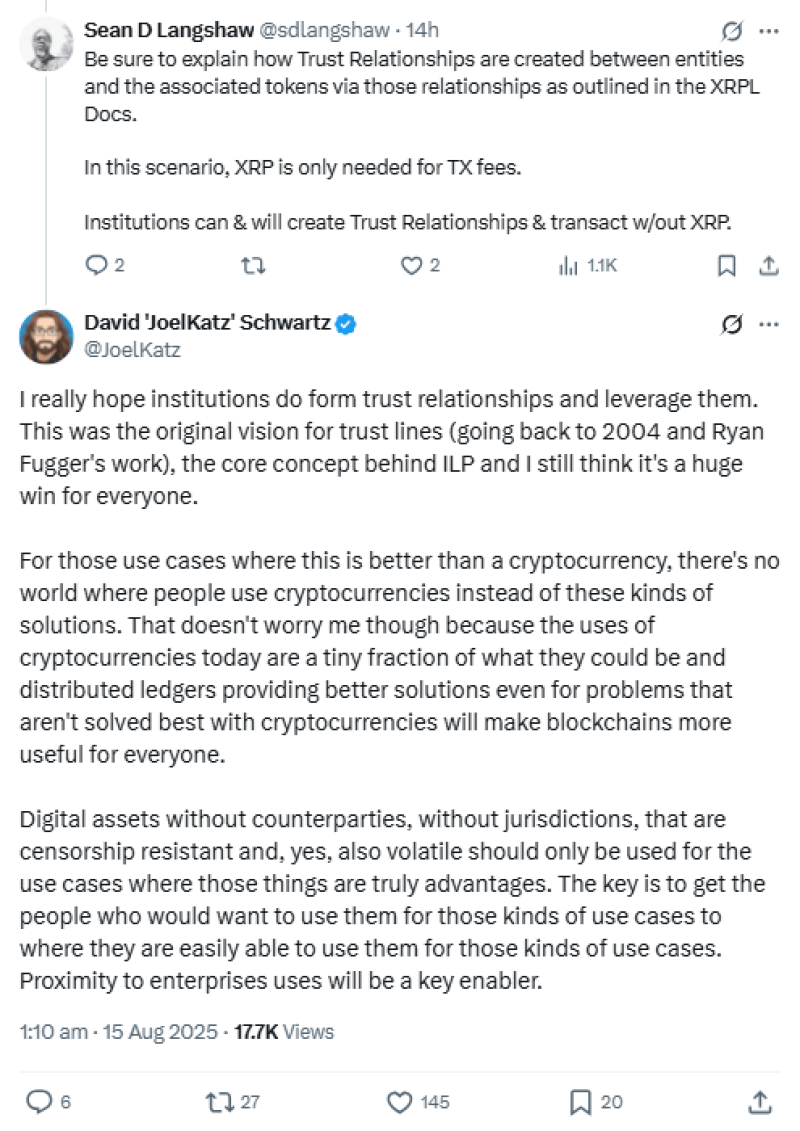
During an engaging discussion on social media platform X, Schwartz addressed a long-standing question within the crypto community: how do trust mechanisms on the XRP Ledger (XRPL) function, and why should large-scale institutions take notice? According to him, this underutilized feature represents a fundamental advantage for XRP’s real-world use and could significantly drive institutional participation without disruptive changes to existing systems.
XRP Ledger Allows Institutions to Avoid Crypto Complexity
The XRP Ledger introduces a system that could allow companies to bypass the need to directly interact with XRP tokens. One X user raised this idea in a thread, stressing that institutions might avoid handling XRP altogether—only covering transaction costs in the background. Rather than resisting this notion, Schwartz openly supported it, reinforcing that this approach aligns perfectly with the XRPL’s original design philosophy.
Central to this functionality are trust lines—lightweight ledger structures that enable customizable and controlled interaction between parties. Each trust line costs a mere 0.2 XRP to maintain, offering a low-barrier entry point for financial players. An even more compelling feature is authorized trust lines, which give asset issuers the ability to control exactly who can hold their tokens—a compliance-friendly innovation particularly attractive to traditional finance.
Ripple’s Infrastructure Handles the Heavy Lifting
To illustrate XRPL’s potential, Schwartz provided a practical example. Imagine Alice, who accepts Bitcoin, and Bob, who prefers cash at his grocery store. They have an ongoing credit relationship. Under ordinary circumstances, facilitating payments between them would require cumbersome conversions and coordination.
With Ripple’s Interledger Protocol (ILP) coupled with XRPL, this becomes seamless. Schwartz explained that the platform could mediate the conversion from Bitcoin to cash using smart routing, atomic payments, and transparent accounting—without requiring Alice or Bob to become blockchain experts. All the complexity is handled behind the scenes, with XRP acting as the invisible infrastructure enabling interoperability.
XRP Ecosystem Grows Quietly Beneath the Surface
What makes this setup revolutionary is that institutional users gain the benefits of blockchain efficiency while maintaining their existing workflows. They’re not trading XRP, yet every action—every trust line and every transaction—consumes a small amount of XRP, contributing to organic network demand.
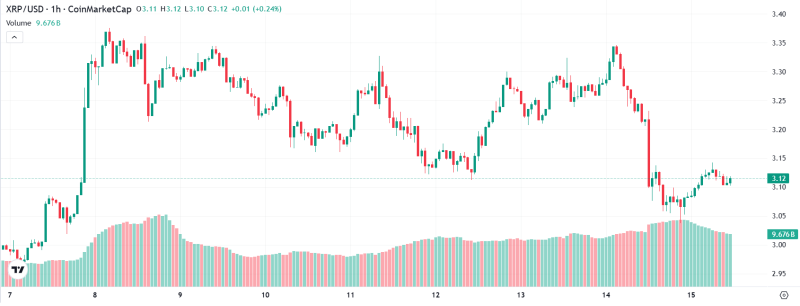
This form of indirect usage could yield powerful price implications for XRP over time. As more financial institutions use XRPL as a compliance-friendly platform, the ecosystem grows—and so does the need for XRP tokens, whether institutions realize it or not.
Related: XRP Price: $12M Max Pain for Bears
Rather than forcing banks to abandon their infrastructure, Ripple is embedding fresh functionality into familiar systems. If this quiet, strategic adoption continues, it could be the tipping point XRP has been waiting for. As Schwartz emphasized, the XRPL was built for this purpose—providing a foundation that merges modern blockchain capabilities with the traditional financial world, all without friction.
Quick Summary
XRP adoption could be on the verge of a breakthrough following key insights shared by Ripple’s Chief Technology Officer, David Schwartz. His recent comments highlight how XRP Ledger’s built-in trust mechanisms can simplify blockchain integration for major financial institutions.
Source
Information sourced from official Ripple publications, institutional research, regulatory documentation and reputable crypto news outlets.
Author
Ripple Van Winkle is a cryptocurrency analyst and founder of XRP Right Now. He has been active in the crypto space for over 8 years and has generated more than 25 million views across YouTube covering XRP daily.
Editorial Note
Opinions are the author's alone and for informational purposes only. This publication does not provide investment advice.

