








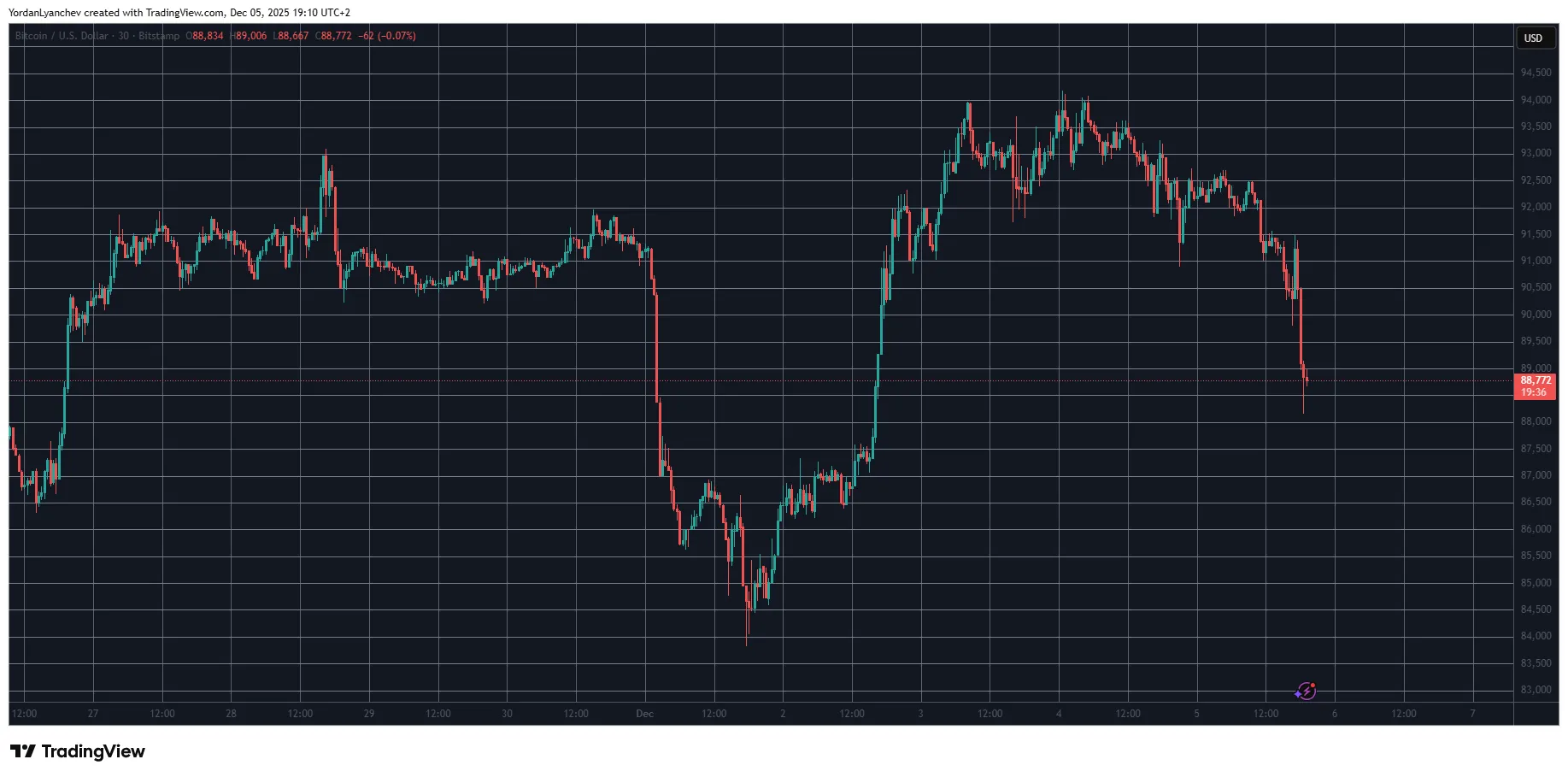
Bitcoin experienced a sharp decline, falling below $90,000 and reaching a 5-day low of $88,000, triggering a broader market downturn. The altcoin market followed Bitcoin’s lead, with Ethereum, XRP, Solana, and Cardano experiencing notable declines, contributing to a $500 million liquidation event.
What to Know:
- Bitcoin experienced a sharp decline, falling below $90,000 and reaching a 5-day low of $88,000, triggering a broader market downturn.
- The altcoin market followed Bitcoin’s lead, with Ethereum, XRP, Solana, and Cardano experiencing notable declines, contributing to a $500 million liquidation event.
- This volatility highlights the inherent risks in the crypto market and the potential for rapid price swings, impacting both retail and institutional investors.
Bitcoin’s recent dip below the $90,000 mark serves as a stark reminder of the digital asset market’s inherent volatility. This price movement, occurring within a broader context of regulatory uncertainty and macroeconomic shifts, has significant implications for institutional investors navigating this nascent asset class. The rapid downturn underscores the importance of risk management and the potential for substantial liquidations in leveraged positions.
The initial drop in Bitcoin’s price triggered a ripple effect across the altcoin market. Ethereum, a bellwether for the decentralized finance (DeFi) sector, saw its price retreat, testing the $3,000 support level. XRP, often scrutinized for its regulatory status, also experienced downward pressure. Other prominent altcoins like Solana, Dogecoin, and Cardano faced even steeper declines, amplifying the overall market’s bearish sentiment. This synchronized movement highlights the interconnectedness of the crypto market, where Bitcoin’s performance often dictates the direction of the broader asset class.
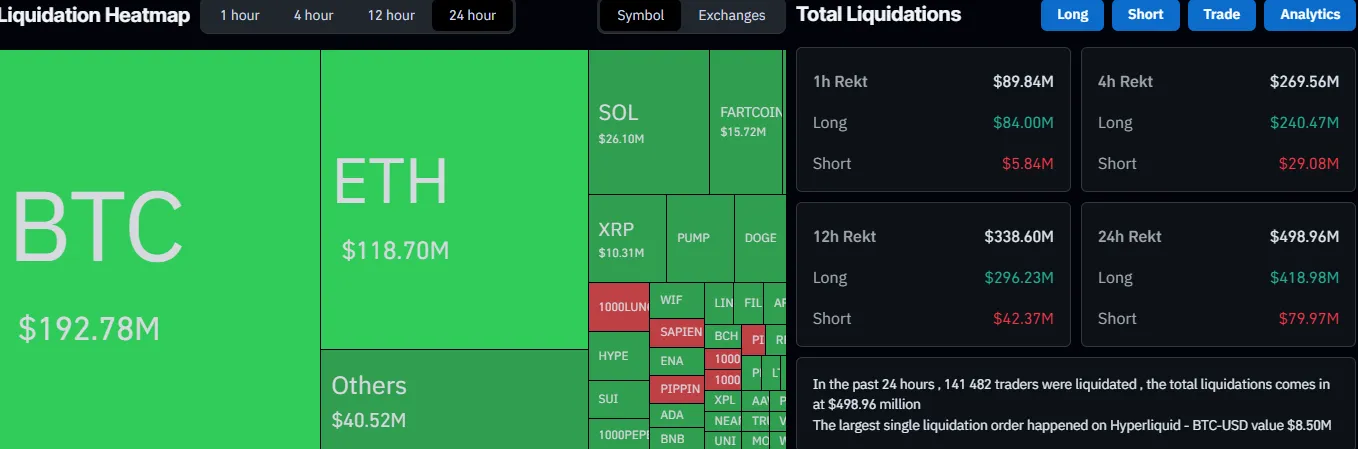
The magnitude of the market’s decline is further underscored by the significant liquidations that occurred. Within a 24-hour period, approximately $500 million worth of positions were liquidated, with a substantial portion attributed to long positions. This liquidation event affected over 140,000 traders, demonstrating the potential for cascading losses in a highly leveraged market. The single largest liquidation, valued at $8.5 million, occurred on the Hyperliquid exchange, highlighting the risks associated with trading on platforms offering high leverage.
The current market dynamics bear resemblance to previous instances of heightened volatility in the crypto space. For example, the market experienced similar rapid corrections following periods of exuberance in 2017 and 2021. These events underscore the cyclical nature of the crypto market, characterized by periods of rapid growth followed by sharp pullbacks. Institutional investors must recognize these patterns and develop strategies to mitigate potential losses during periods of market stress.
From a market structure perspective, the recent downturn highlights the importance of liquidity and order book depth. During periods of heightened selling pressure, the lack of sufficient buy orders can exacerbate price declines, leading to increased volatility. This is particularly relevant for altcoins, which often have lower trading volumes compared to Bitcoin and Ethereum. Institutional investors need to carefully assess the liquidity profile of different crypto assets before deploying capital, ensuring they can exit positions efficiently during periods of market turbulence.
Looking ahead, the regulatory landscape will continue to play a crucial role in shaping the trajectory of the crypto market. Increased regulatory scrutiny could lead to further market volatility, as investors grapple with uncertainty regarding the future of digital assets. The potential approval of spot Bitcoin ETFs in the United States could provide a significant boost to institutional adoption, but regulatory hurdles remain. The SEC’s stance on crypto regulation will be a key factor to watch in the coming months.
In conclusion, Bitcoin’s recent price drop and the ensuing altcoin market correction serve as a valuable lesson for institutional investors. The crypto market remains a high-risk, high-reward environment characterized by rapid price swings and significant liquidation events. A thorough understanding of market structure, risk management, and the regulatory landscape is essential for navigating this evolving asset class. While the long-term potential of blockchain technology remains promising, investors must approach the crypto market with caution and a well-defined investment strategy.
Related: $2.3 Trillion Liquidity Shock: Franklin Templeton Says XRP Is Next in Line for Massive Inflows
Source: Original article
Quick Summary
Bitcoin experienced a sharp decline, falling below $90,000 and reaching a 5-day low of $88,000, triggering a broader market downturn. The altcoin market followed Bitcoin’s lead, with Ethereum, XRP, Solana, and Cardano experiencing notable declines, contributing to a $500 million liquidation event.
Source
Information sourced from official Ripple publications, institutional research, regulatory documentation and reputable crypto news outlets.
Author
Ripple Van Winkle is a cryptocurrency analyst and founder of XRP Right Now. He has been active in the crypto space for over 8 years and has generated more than 25 million views across YouTube covering XRP daily.
Editorial Note
Opinions are the author's alone and for informational purposes only. This publication does not provide investment advice.

